Frequently Asked Questions
Everything you need to know about our spacer mesh fabrics, customization options, ordering process, and quality standards.
12+
Years Experience
ISO9001
Certified
20+
Countries Served
Browse by Category
Select a topic to explore related questions
Custom Development
8 QWhat information do you need before developing a new spacer mesh?
We need to know the final product, target thickness, GSM, width, color, handfeel, support level, mesh style, testing requirements, and estimated order quantity. If the customer has an existing fabric sample, it is very helpful.
For example, if the product is a baby mattress cover, we may start from BD2T-7F or AD2D-7F. If it is for shoes or bags, we may compare with BC2-4B4, 2BC2-8A, or BC2-6B3 first.
Can you develop a fabric based on our existing sample?
Yes. We can analyze the fabric structure, yarn, thickness, GSM, mesh pattern, and machine type. Then we adjust yarns, machine parts, needle arrangement, and finishing parameters to make a similar or improved version.
If the sample is close to our stock fabrics, we may recommend a current option first, such as BD2-7C1, BD2D-4B, B2E-6C, or BC2-4B2, to save development time and cost.
How long does new fabric development usually take?
For a new spacer mesh structure, development normally takes time because the machine needs adjustment, yarn preparation, knitting trial, finishing, and evaluation. In many cases, sample development takes around 10–20 days, depending on complexity.
Simple color or width changes are faster. New patterns, new yarn combinations, plant-based yarns, or thicker 3D structures need more time.
Why does new development require a higher MOQ?
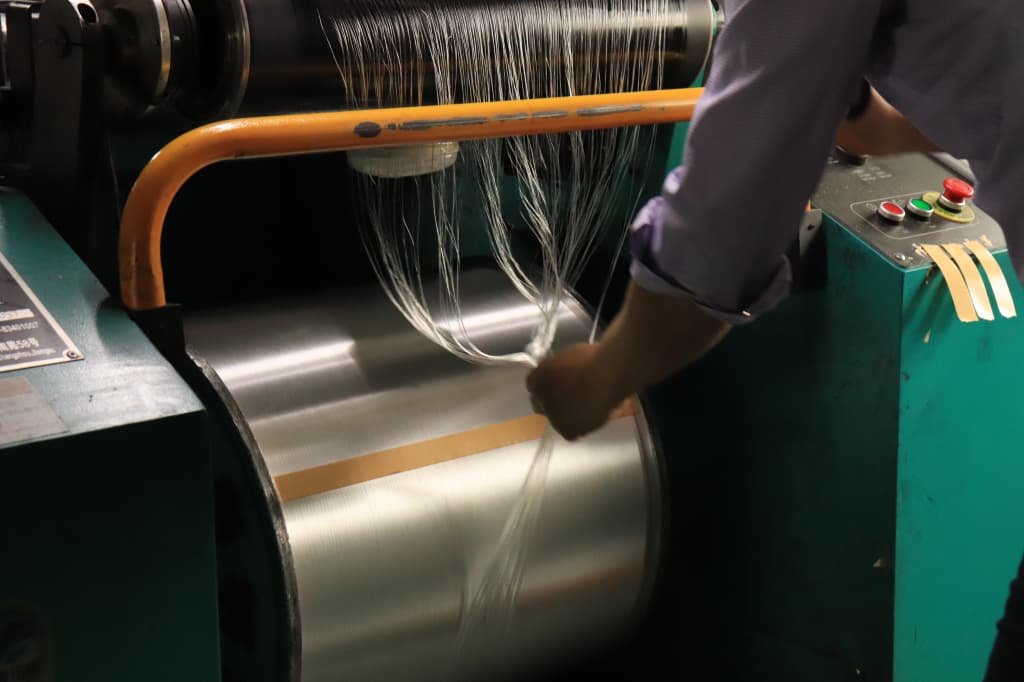
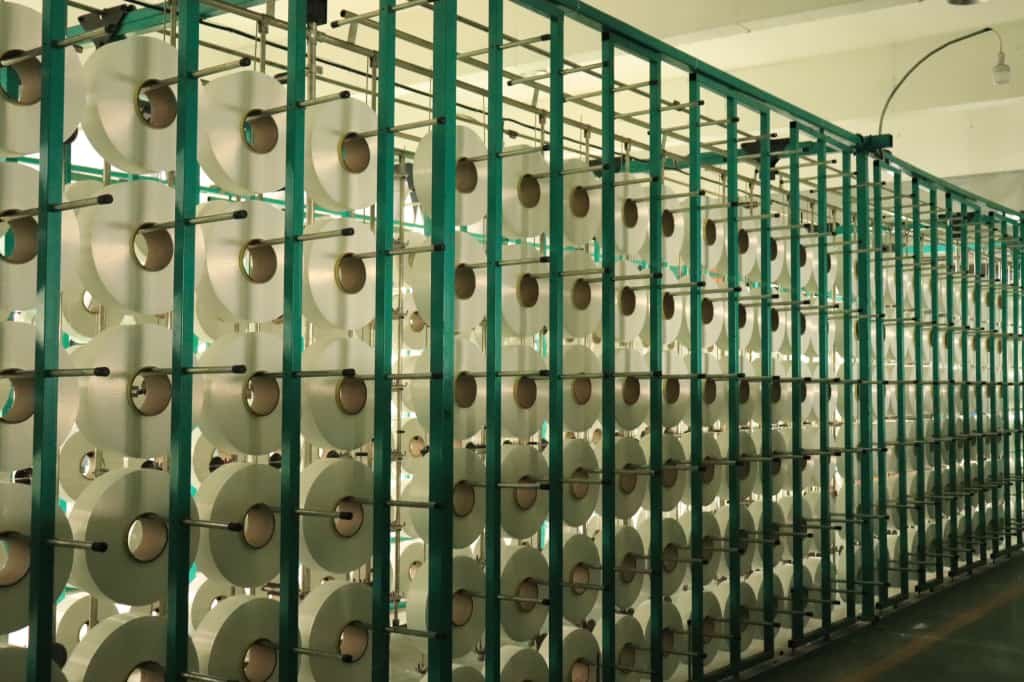
Spacer mesh is made by warp knitting, which needs thousands of yarns running at the same time. Preparing yarn cones, warp beams, machine parts, and machine adjustment creates a high starting cost.
For completely new structures, greige fabric MOQ is usually much higher than stocked fabric. If the customer’s quantity is not enough, we first check whether existing options like AC2-6N7, BD2D-7A, BC2-4B4, or B2E-6C can meet the requirement.
Can you customize mesh hole shape?
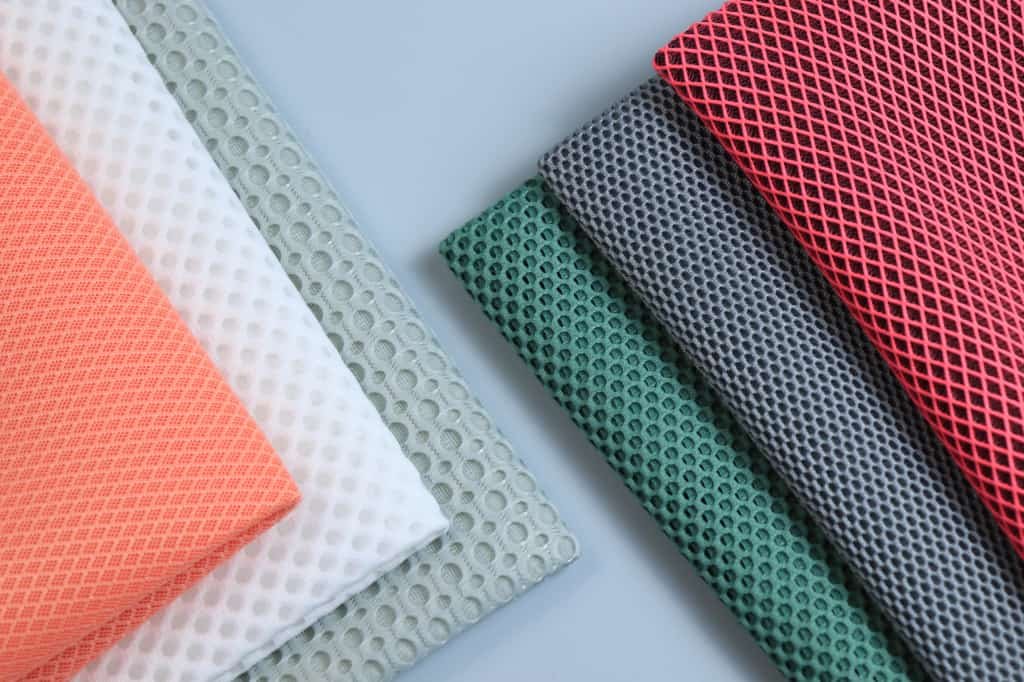
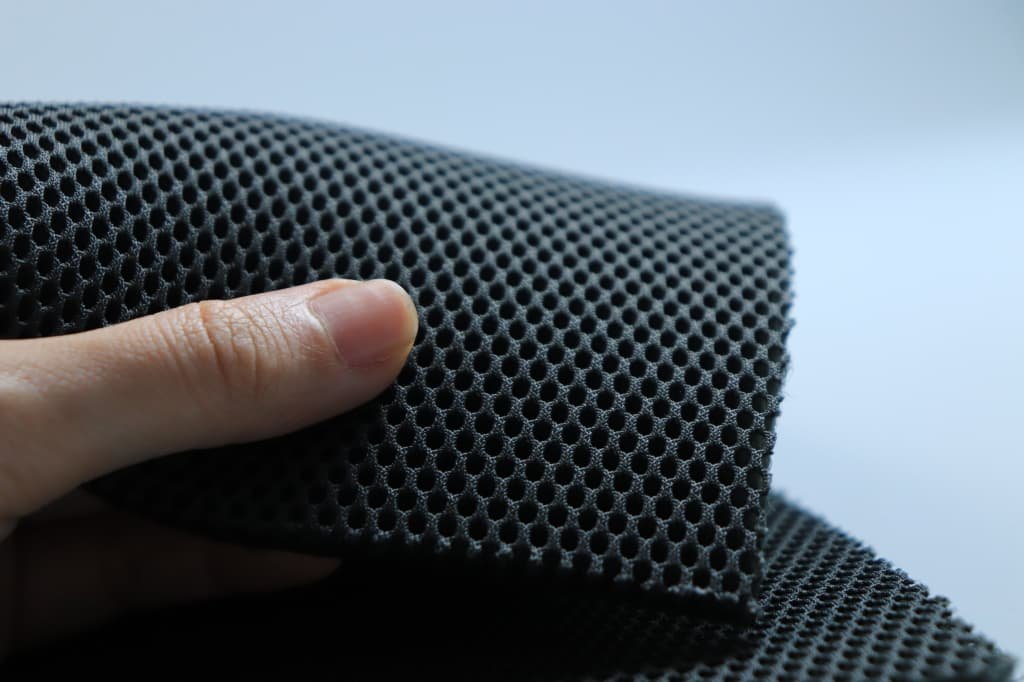
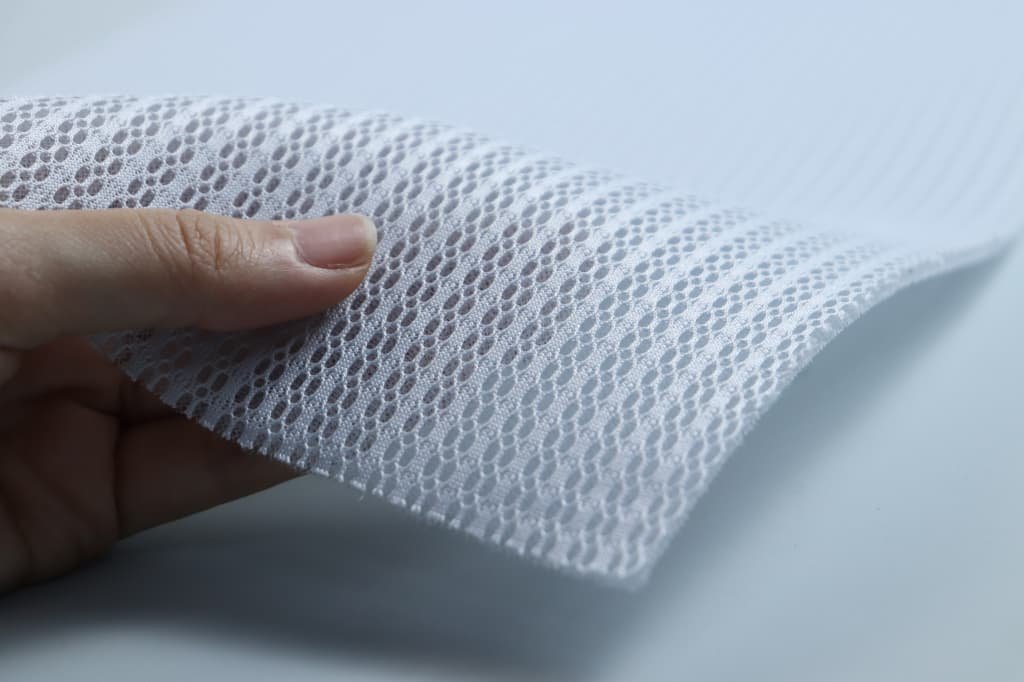
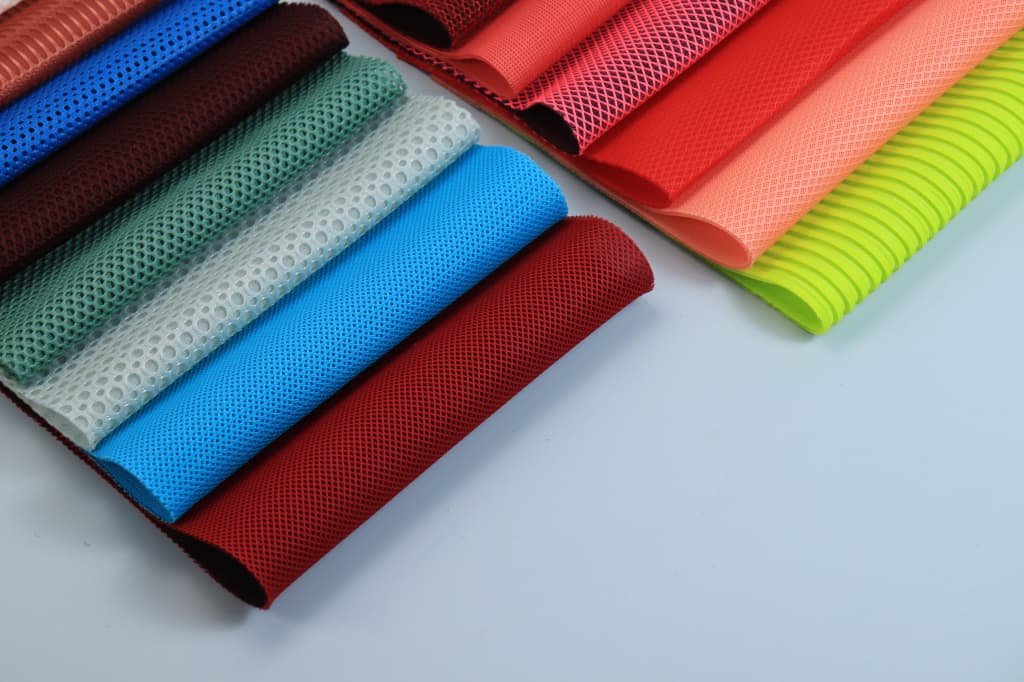
Yes. Mesh shape depends on yarn arrangement and needle layout. We can develop round holes, hexagon holes, diamond holes, stripe patterns, mixed-size holes, and special geometric patterns.
For existing references, BD2-7C1 has large and small round holes, BD2D-4B has vertical diamond mesh, B2E-6C has large hexagon holes, and BC2-4B4 has diamond mesh with small inner holes.
Can you customize handfeel?
Yes. Handfeel can be adjusted by yarn type, yarn count, structure, thickness, heat setting, and finishing. DTY yarn usually feels softer. FDY yarn feels cleaner and more stable. Tencel™ lyocell or modal can give a smoother skin-touch feeling.
For soft baby products, AD2D-7F and BD2T-7F are good references. For stronger and more structured handfeel, BC2D-2A, 2BC2-8A, and BD2D-7A are better references.
Can you customize stretch and recovery?
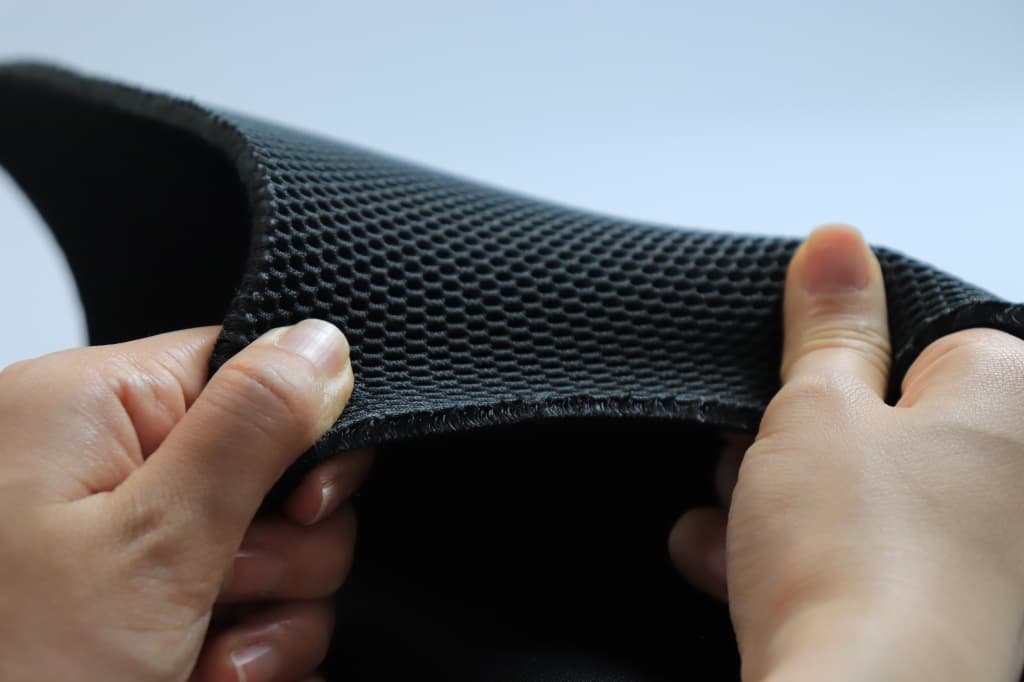
Yes. Stretch can be adjusted by structure, yarn, bottom construction, and spandex content. However, too much stretch may affect cutting stability, so we need to balance elasticity and production efficiency.
For high stretch recovery, BC2-6B3 is a good reference because it contains spandex. For stable stretch with clear structure, BD2-6N6 and BD2-7N1 can also be used as development directions.
Can you help choose a fabric if we only know the final product?
Yes. Many customers do not know the exact fabric specification at the beginning. You can tell us the application, target market, product structure, price level, and testing requirements. We will recommend several suitable options.
For example, for a baby stroller liner, we may recommend AD2D-7F, BD2T-7F, or BD2-7C1. For a backpack back panel, we may recommend BD2-6N6, BC2-4B4, or BC2-6B3.
Dyeing & Finishing Process
8 QWhy is heat setting so important for spacer mesh fabric?
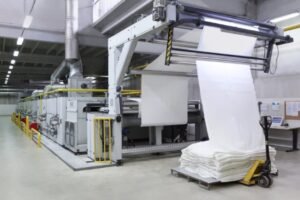
Heat setting controls more than fabric width. It also affects thickness, GSM, mesh shape, surface flatness, handfeel, elasticity, and rebound.
For example, fabrics like BD2D-4B and BD2-7C1 have clear mesh patterns, so poor heat setting may make the mesh look uneven. For thicker options like BD2-6N6, heat setting is also important for thickness recovery and shape stability.
Why do you relax the greige fabric before heat setting?
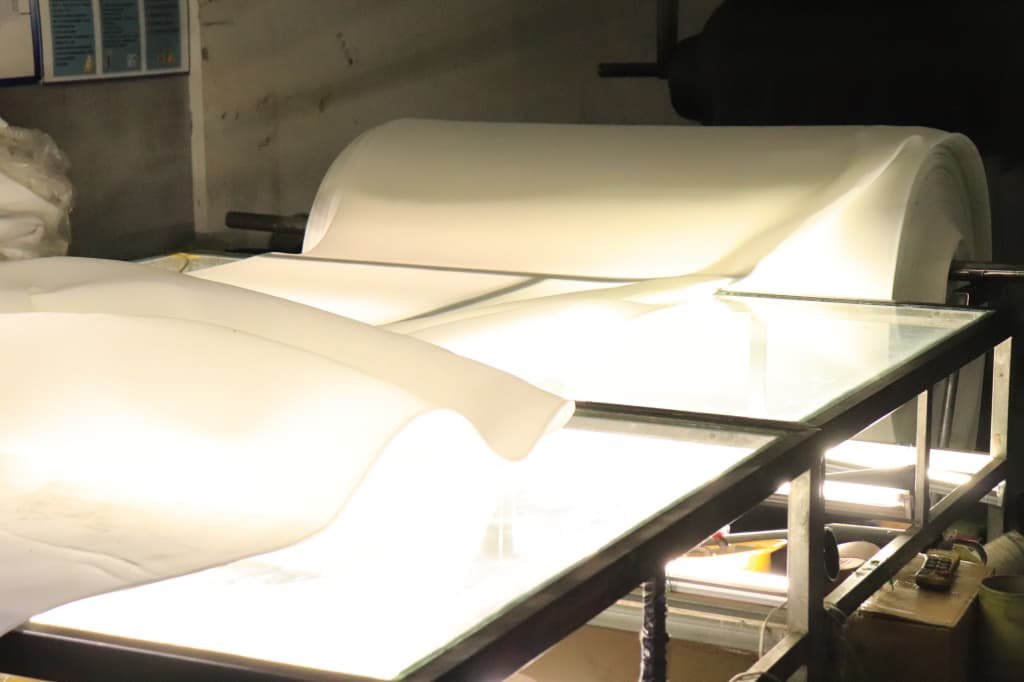
Before heat setting, the greige fabric needs to be unrolled and relaxed. In our process, it is usually relaxed for around 12 hours before going onto the setting machine.
This helps release tension from knitting and rolling. If the fabric is set too quickly without relaxation, width, thickness, and mesh shape may become less stable.
Why does changing the setting width affect fabric quality?
When spacer mesh is set wider or narrower, the yarn structure changes. This can affect GSM, hole shape, thickness, handfeel, and elasticity.
For example, if a customer forces a 220cm fabric to a much wider width, the mesh may become flatter and GSM may become lower. For stable bulk orders, we prefer tested widths such as 220cm for AC1, BD2T-7F, BD2-7C1, or 150cm for BC2-4B4 and BC2-4B2.
Why is spacer mesh dyeing more difficult than flat fabric dyeing?
Spacer mesh has a 3D air-layer structure, so dye must penetrate the surface, bottom, and inner structure. If dyeing is not controlled well, the fabric may have uneven shade, cloudy color, inside-outside color difference, or local marks.
This is especially important for thicker fabrics such as BD2D-7A, BD2-6N6, and BD2-7N1, because the thicker the structure, the more attention is needed for dye penetration and circulation.

Why can’t the dyeing and fixation time be shortened?
Shortening dyeing time may reduce cost, but it increases quality risk. Spacer mesh needs enough time for the dye to enter the yarn and attach properly.
In our normal process, dyeing temperature is usually around 120–140°C, and the fabric needs holding time before unloading to improve color fixation. This is important for baby products, mattress covers, seat pads, and products that may contact skin or sweat.

Why do you need second heat setting after dyeing?
After dyeing and dehydration, the fabric is wet and tightly stacked. If it is not set quickly, color may transfer between layers and cause mottled shade or uneven surface.
Second heat setting helps adjust final width, thickness, mesh appearance, flatness, and handfeel. This is especially important for fabrics like AD2D-7F, BD2D-11B, and B2E-6C, where surface feel and appearance are key selling points.
Will dyeing affect fabric elasticity and thickness?
Yes. Dyeing, dehydration, drying, and heat setting can all affect elasticity and thickness. If drying is too aggressive or tension is not controlled, the fabric may lose thickness or become less elastic.
For elastic or thick fabrics such as BC2-6B3 and BD2-6N6, we pay special attention to drying tension, temperature, and final setting conditions.
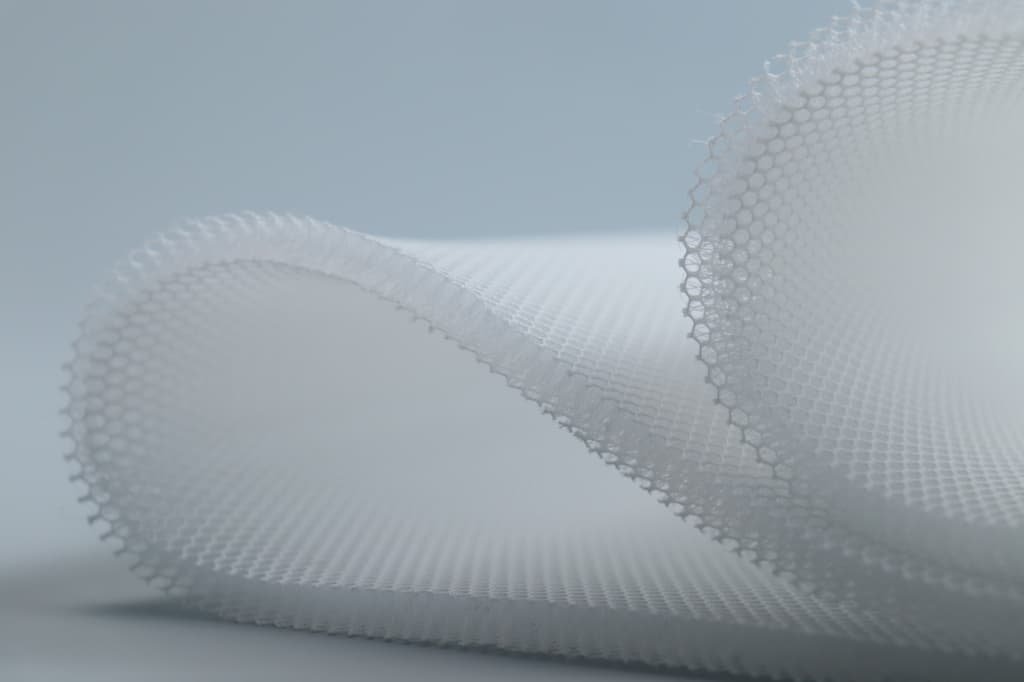
What do you inspect after dyeing and finishing?
After dyeing and setting, we check color difference, color fastness, width, GSM, thickness, mesh appearance, handfeel, elasticity, and fabric defects. Only qualified rolls are packed for shipment.
For visible surface fabrics such as BD2D-4B, BD2-7C1, 2BD2-6B1, and BC2-4B4, mesh appearance and color consistency are especially important.
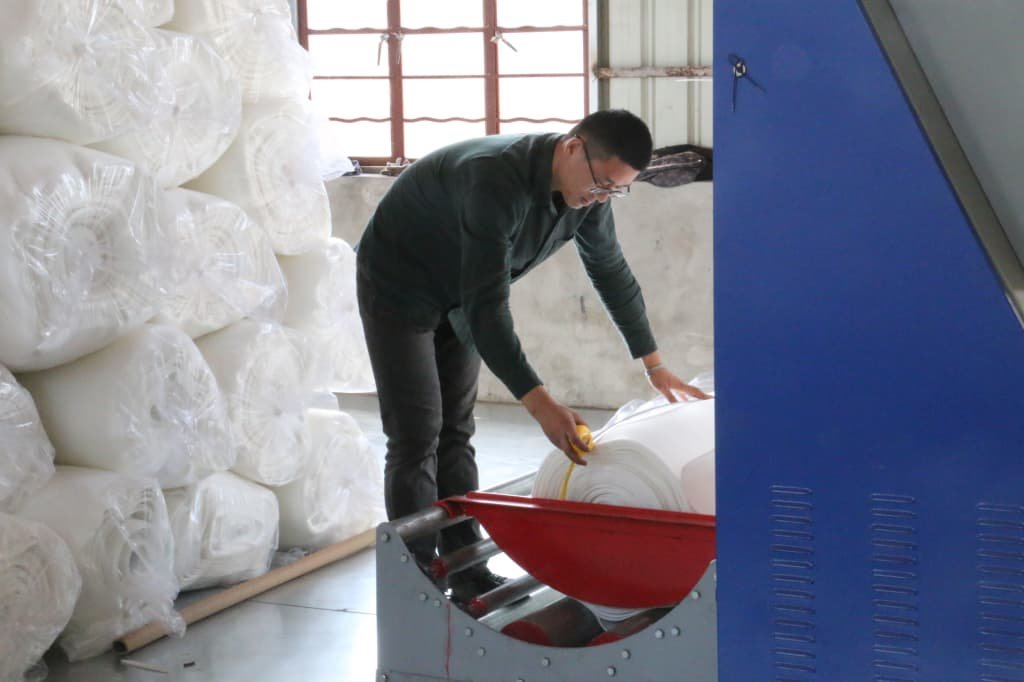
Fabric Specifications
8 QWhat fabric width should I choose for my product?
For large-size products such as mattress covers, baby mattresses, pillows, and bedding panels, we usually recommend 220cm wide-width fabrics because they help reduce cutting waste. For smaller products such as shoes, bags, seat pads, and accessories, 150cm regular-width fabrics are often easier to handle.
For example, AC1, BD1 wide width, BD2T-7F, and BD2-7C1 are suitable wide-width options. For shoes and bags, BC2-4B4, BC2-4B2, and BD2D-7A can be considered.
Does fabric width affect GSM, thickness, and mesh shape?
Yes. Spacer mesh fabric is a 3D structure, so width setting is not just a size adjustment. If the fabric is set narrower, GSM may become higher and the mesh holes may look slimmer. If it is set wider, GSM may become lower and the mesh holes may look flatter.
That is why we recommend choosing an existing stable width when possible. For example, BD2D-11B is 160cm and suitable for soft baby and bedding products, while BD2-6N6 is 220cm and better for thicker breathable panels.
How do I choose the right GSM?
GSM affects fabric weight, support, handfeel, and cost. Lower GSM fabrics are lighter and more economical. Higher GSM fabrics usually feel stronger, thicker, and more supportive.
For light and breathable use, 2AD2-7B, 140GSM or AC1, 175GSM can be used. For stronger support, AD1, 290GSM, BD2D-7A, 430GSM, or BC2-6B3, 570GSM are better choices.
How do I choose the right thickness?
Thin spacer mesh is suitable for garments, mattress covers, and surface layers. Medium thickness is common for bedding, shoes, bags, and seat panels. Thicker spacer mesh or 3D mesh is better when the product needs cushioning, airflow, and support.
For a soft baby product layer, AD2D-7F, 3.7mm is suitable. For breathable thick cushioning, BD2-6N6, 5.8mm or BD2-6N6, 9mm can be considered. For stronger seat support, BD2-7N1, 8mm is a better direction.
What is the difference between regular spacer mesh and thicker 3D mesh?
Can the same fabric be made heavier or lighter?
Yes, but changing GSM may also change the mesh shape, thickness, handfeel, elasticity, and cost. If the change is small, we may adjust it during heat setting. If the change is large, we may need to change yarn, structure, or machine setting.
For example, if a customer likes the breathable style of AC1 but needs better stability, we may recommend BD1 wide width instead of simply increasing AC1’s GSM.
Which specification is better for products that need soft touch?
Soft touch depends on yarn type, yarn fineness, surface structure, and finishing. DTY yarn usually feels softer and fluffier than FDY yarn. Tencel™ lyocell and modal blends can provide a smoother skin-friendly touch.
For baby and skin-contact products, BD2T-7F has a Tencel™ lyocell surface. AD2D-7F uses soft DTY yarn. Mes-tio Shield™ is a thinner skin-friendly option with Lenzing modal, Lenzing lyocell, and EcoCosy viscose.
Which specification is better for products that need stronger support?
For stronger support, we look at thickness, GSM, middle yarn, bottom structure, and yarn strength together. A heavier fabric with stronger middle yarn and a stable bottom structure usually performs better.
For wheelchair pads or supportive baby products, AD1 is a good medium-thick choice. For shoes, bags, and car seat pads, BC2-6B3 offers a strong and elastic structure with spandex. For firmer slipper or footwear use, BD2D-2B3 is designed as a hardened spacer mesh.
Functional Finishing & Value-added Services
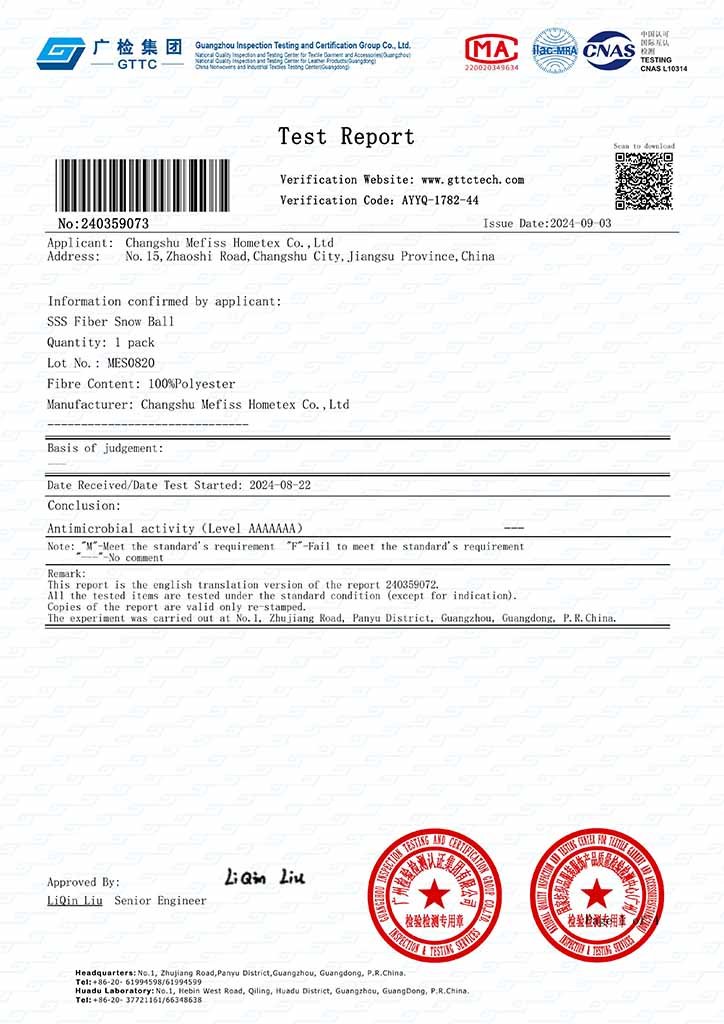
8 QCan you make spacer mesh fabric antibacterial and anti-mite?
Yes. We can provide antibacterial and anti-mite treatment based on product requirements. For small-batch or chemical-free solutions, we have microwave anti-mite and antibacterial treatment. For larger orders, antibacterial agents such as Sanitized™ or Silvadur™ can also be used.
For baby bedding or mattress products, BD2T-7F, AD2D-7F, and Mes-tio Shield™ are good base fabrics. Mes-tio Shield™ is especially suitable when customers need long-lasting antibacterial performance.
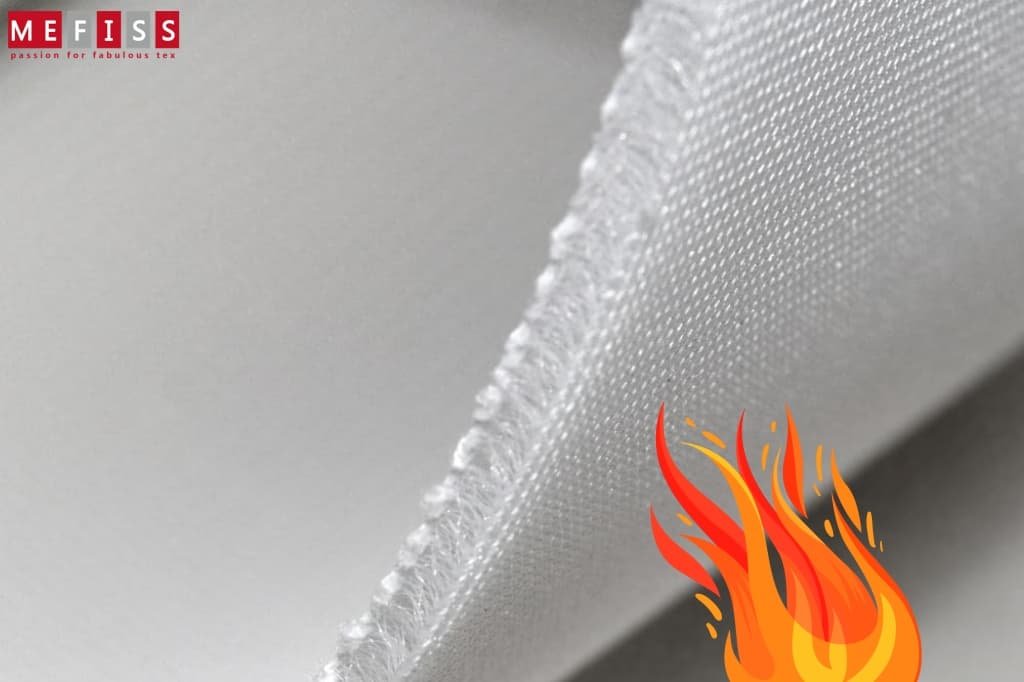
Can spacer mesh fabric be flame retardant?
Yes. Flame retardant treatment can be developed based on the target standard and end use, such as automotive, furniture, or mattress requirements.
For automotive seat pads, office chairs, or mattress-related products, fabrics such as BC2D-2A, BC2-4B2, and BD2D-4B can be used as base materials for further flame retardant testing and development.
Can spacer mesh be laminated with foam?
Yes. Foam lamination is often used when customers need extra cushioning, thickness, or a softer backing. It is common for bags, shoes, cushions, seat pads, and protective products.
For lamination, we often recommend stable and structured fabrics such as BC2-4B4, BC2-4B2, BD2D-7A, or BC2D-2A, depending on the required thickness and appearance.
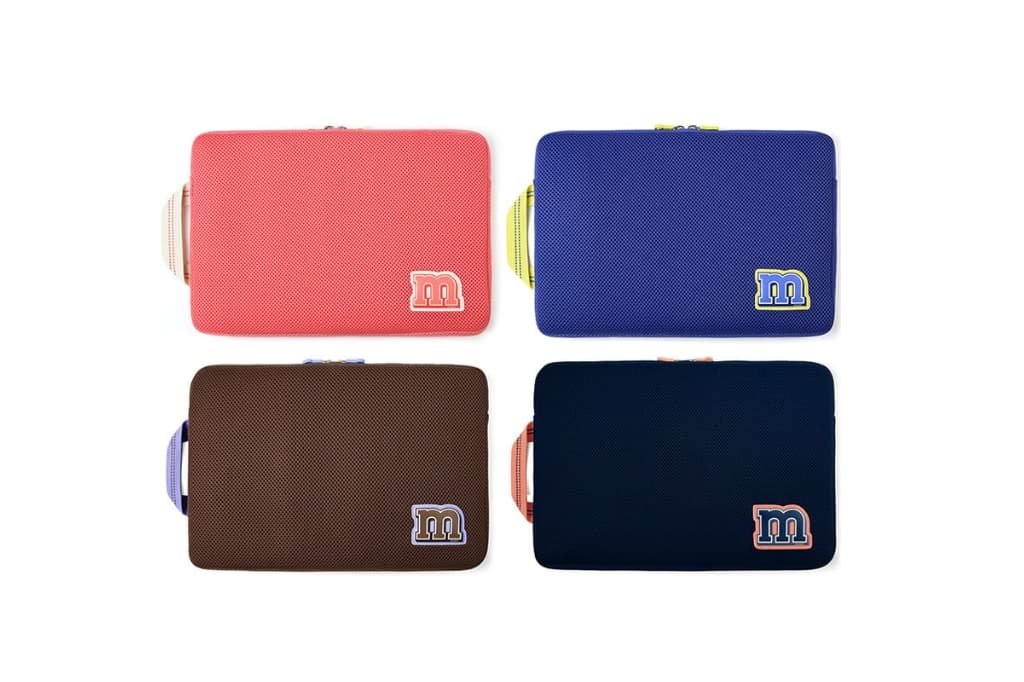
Can spacer mesh be laminated with TPU waterproof film?
Yes. TPU film lamination can help add a waterproof or protective layer. However, TPU lamination will reduce breathability, so it should be used only when waterproof performance is more important than airflow.
For baby pads, mattress protectors, or cushion products, AD2D-7F, BD2T-7F, or BD2-7C1 can be considered as surface fabrics before lamination.
Can you add anti-slip backing?
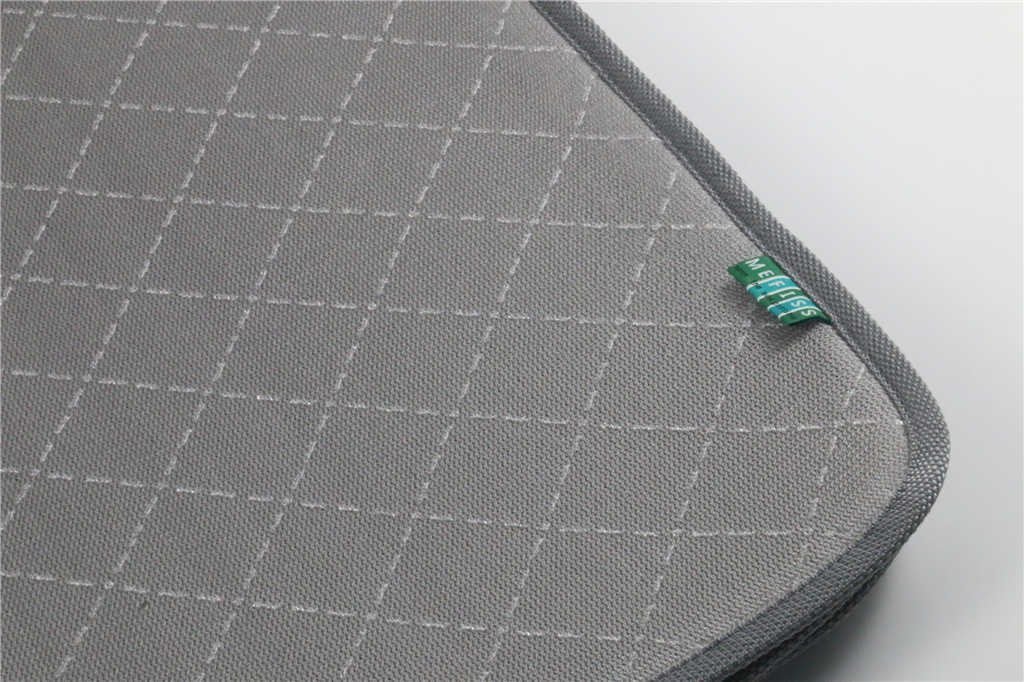
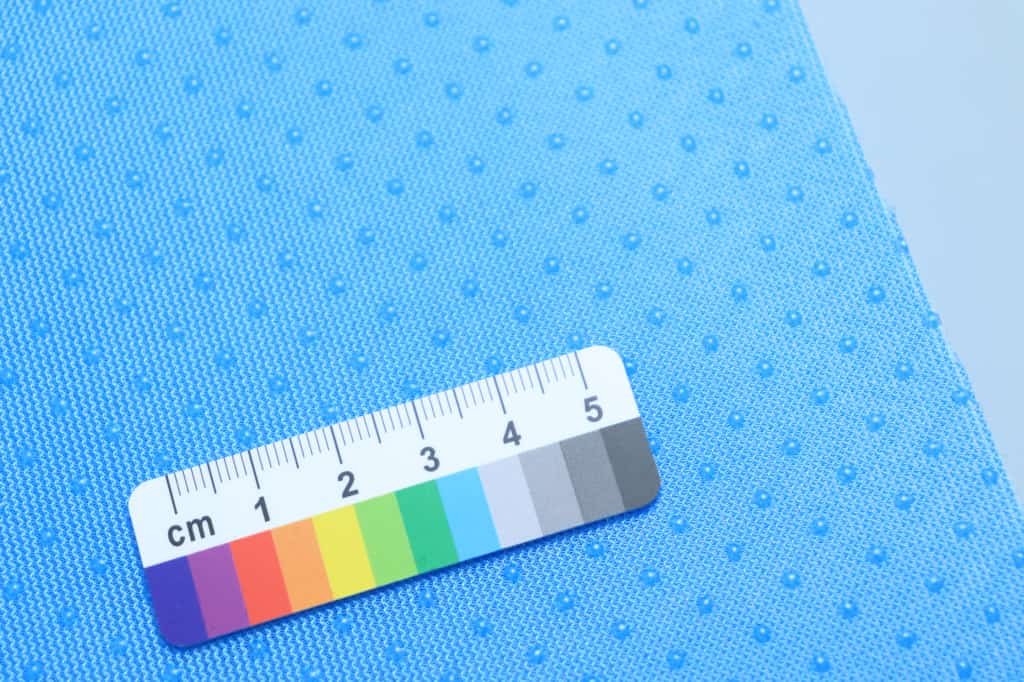
Yes. We can provide silicone anti-slip, PVC anti-slip, or coating anti-slip treatment. This is useful for mattress pads, pet cushions, stroller pads, seat cushions, and protective pads.
For products that need both breathability and anti-slip performance, BD2-6N6, AD1, and BC2-6B3 can be good base fabrics.
Can spacer mesh be printed?
Yes. We can support digital printing, rotary printing, and pigment printing. Printing is useful for baby products, bags, shoes, fashion panels, mattress branding, and decorative home textile products.
For printed fabric, smoother and more stable surfaces are usually preferred. BD2D-11B, B2E-4B2, B2E-6C, and Mes-tio Shield™ are more suitable than very rough or highly textured mesh.
Can spacer mesh fabric be quilted?
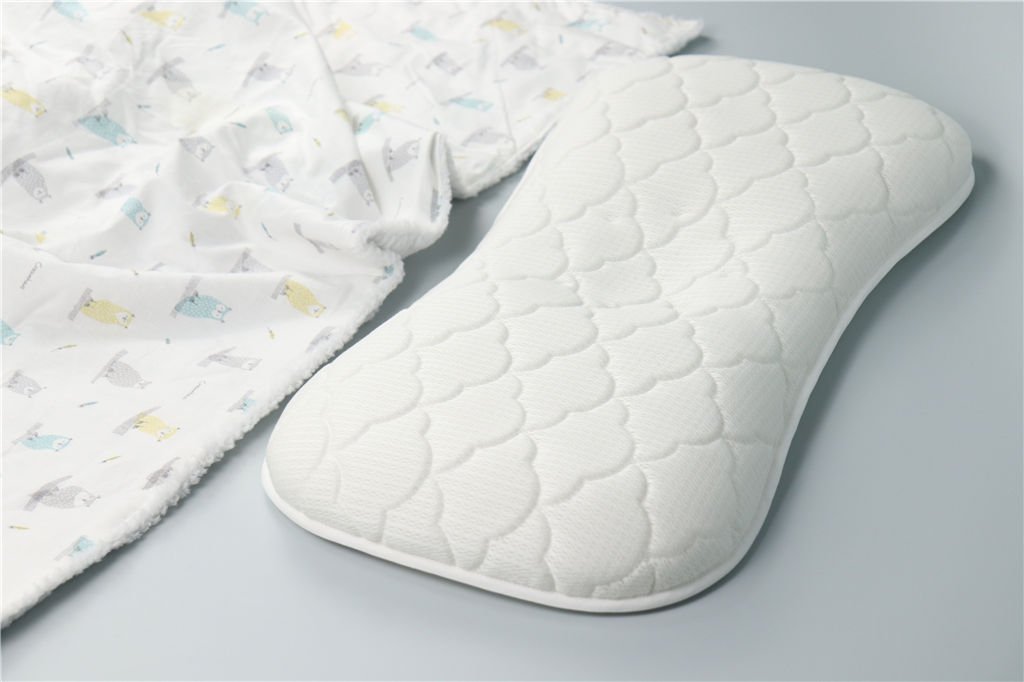
Yes. We can provide panel quilting or roll quilting. Spacer mesh can be quilted with foam, polyfill, silicone sheet, or other fabrics depending on the finished product structure.
For mattress covers, pillows, baby pads, and cushions, AC1, BD1 wide width, BD2T-7F, and AD2D-7F are practical base fabrics. For thicker breathable padding, BD2-6N6 can also be considered.
Can you slit spacer mesh into narrow strips?
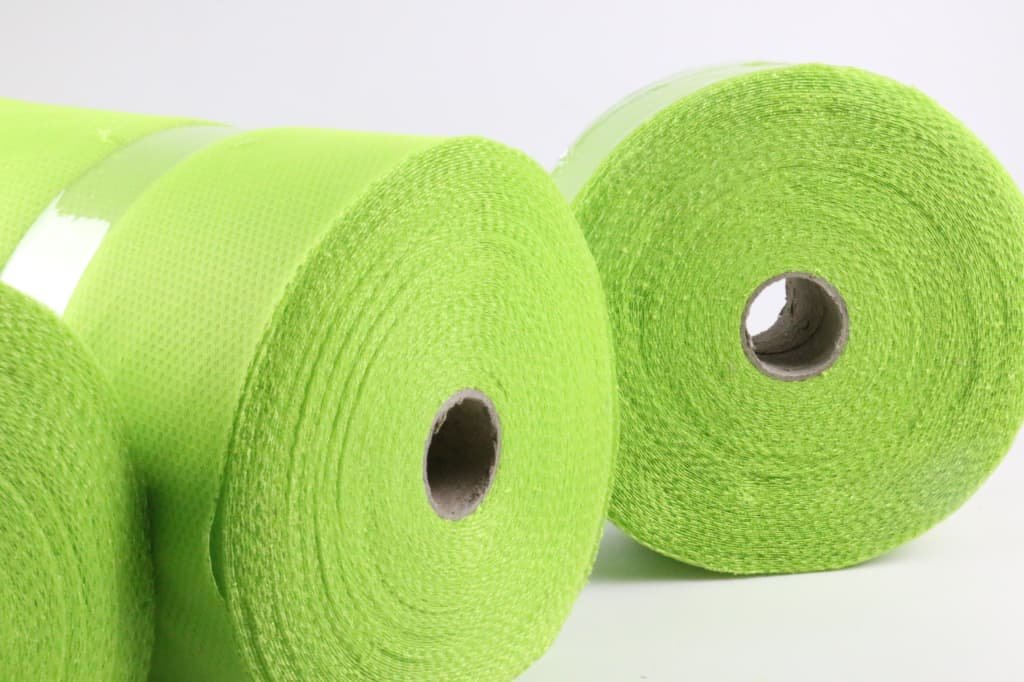
Yes. We can provide slitting service, usually for widths such as 5cm–50cm, depending on fabric type and application. This is useful for bag straps, shoe parts, protective padding, pet products, and industrial use.
For slitting, stable fabrics such as BC2-4B4, BC2-4B2, 2BC2-8A, and BD2D-7A are better choices because they are denser and easier to process.
Lead Time & Delivery
8 QWhat is the normal lead time for stocked fabrics?
If greige fabric is in stock, lead time is usually around 10 days, depending on dyeing schedule, finishing, inspection, and packing.
For stocked fabrics such as AC1, BD1 wide width, AD1, BD2T-7F, AD2D-7F, and B2E-6C, production can usually move faster than custom structures.
What is the lead time if there is no greige stock?
If greige fabric is not available, lead time is usually around 25–30 days, depending on yarn preparation, warping, knitting, finishing, dyeing, inspection, and packing.
For custom structures or special yarns, lead time may be longer because machine adjustment and sample confirmation are needed before bulk production.
Why does spacer mesh production take longer than normal flat fabric?
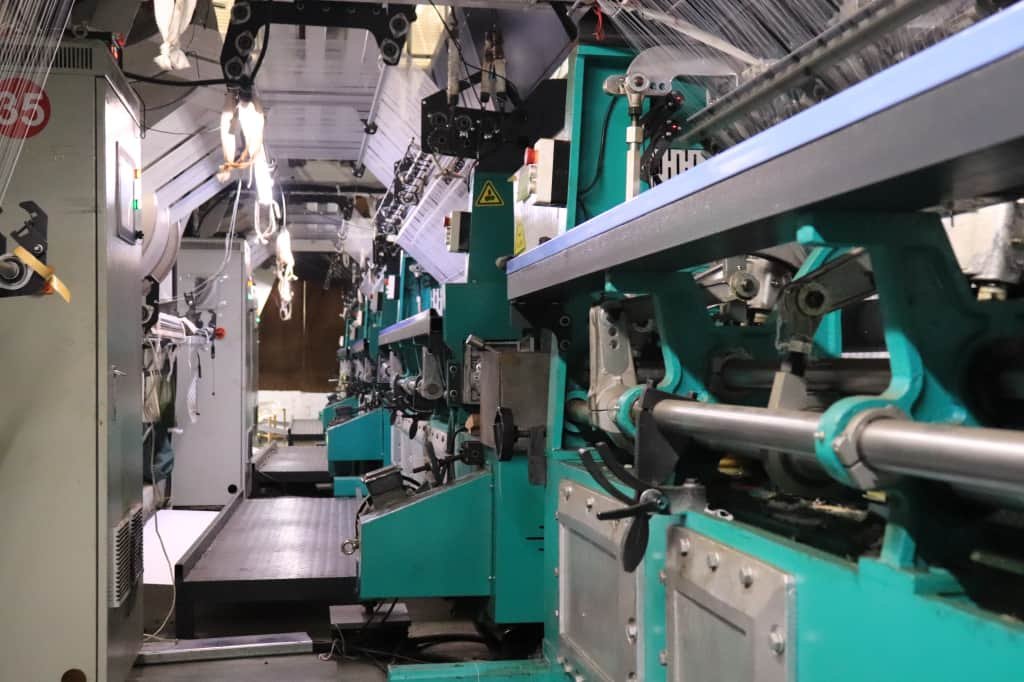
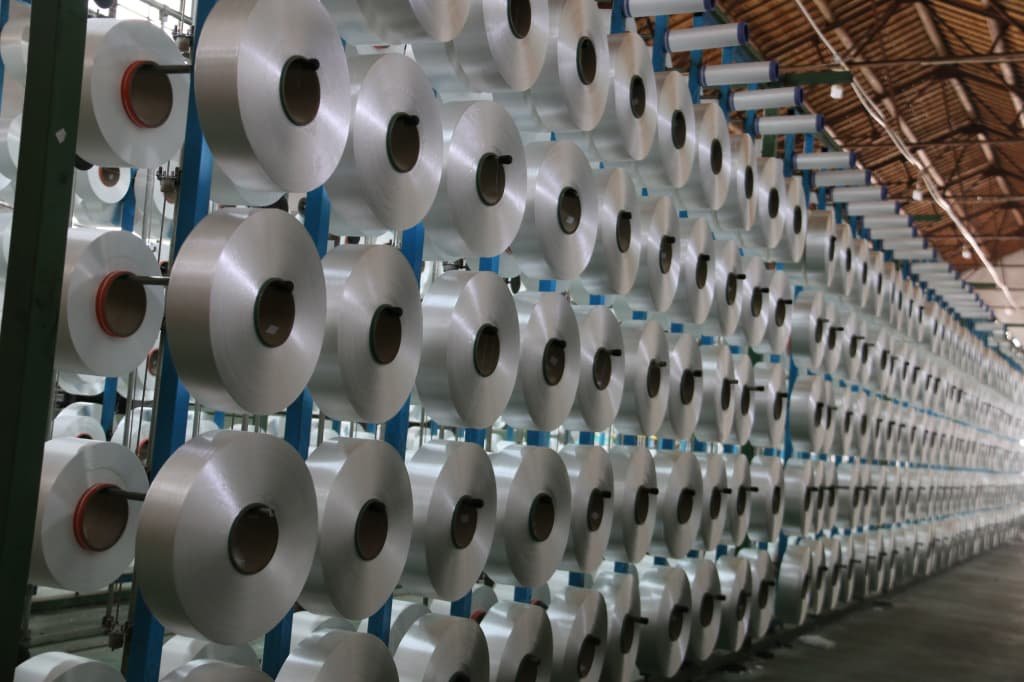
Spacer mesh is warp-knitted with a 3D structure. It needs yarn preparation, warping, machine setting, knitting, greige inspection, heat setting, dyeing, second heat setting, final inspection, and packing.
For thick fabrics such as BD2-6N6, BD2-7N1, or BD2D-7A, finishing and inspection are especially important, so the process cannot be rushed too much.
Can you speed up urgent orders?
If greige fabric is in stock and the color is not complicated, we can try to arrange faster production. However, dyeing, fixation, drying, heat setting, and inspection still need enough process time.
For urgent orders, we recommend choosing stocked fabrics and standard colors first, such as AC1, BD2D-11B, BC2-4B4, BD2-7C1, or B2E-6C.
When should we arrange booking for sea shipment?
For bulk orders, we usually arrange shipment planning before the goods are finished. Booking earlier helps reduce the risk of delay, especially during busy shipping seasons.
For regular repeat orders, we can also plan production and shipment based on the customer’s monthly usage.
How is spacer mesh fabric packed?
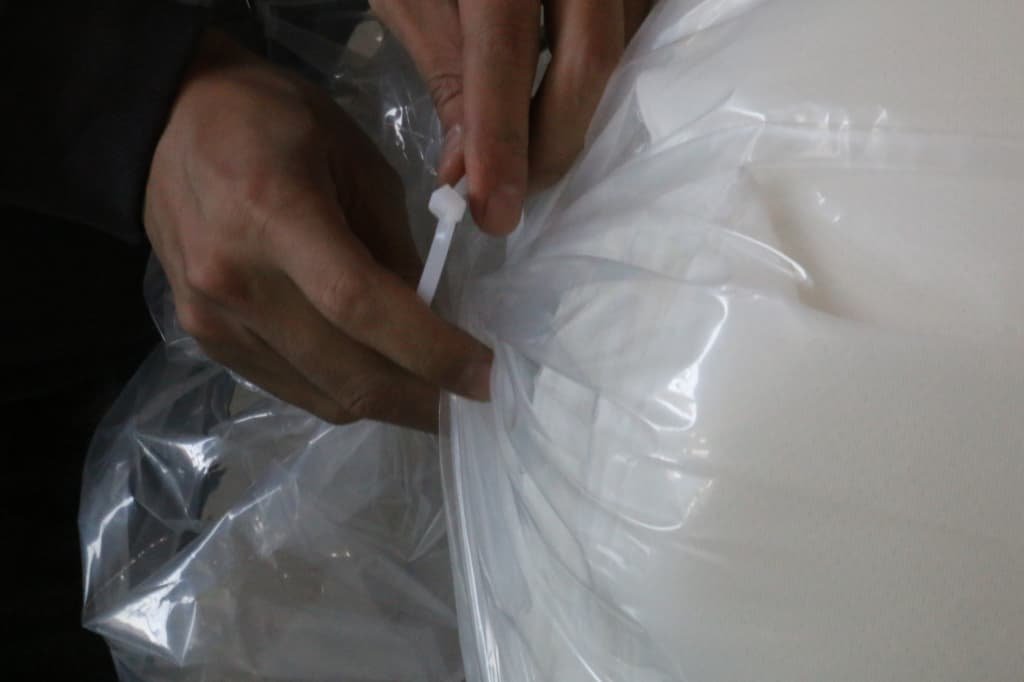
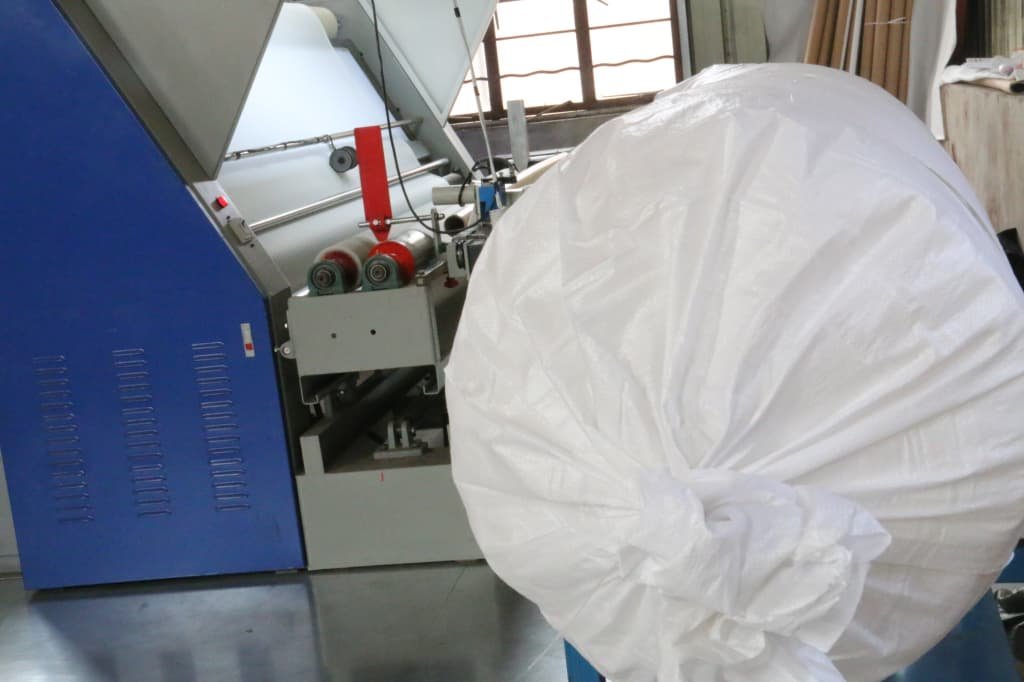
Most spacer mesh fabrics are packed in rolls to keep the fabric flat. A normal 3mm spacer mesh roll is often around 50m per roll, while thicker 3D mesh may have fewer meters per roll and a larger roll diameter.
Outer packing can be a plastic bag, double plastic bag, or plastic bag plus PP woven bag, depending on whether the customer is a factory user or distributor.
Can spacer mesh fabric be vacuum compressed for shipping?
No. Most spacer mesh fabrics use monofilament in the middle layer and have strong rebound. Vacuum compression may create many creases and can affect the fabric appearance.
For products such as BD2-6N6, BD2-7N1, AD1, and BD2D-7A, roll packing is much safer than compression packing.
Can you customize roll length?
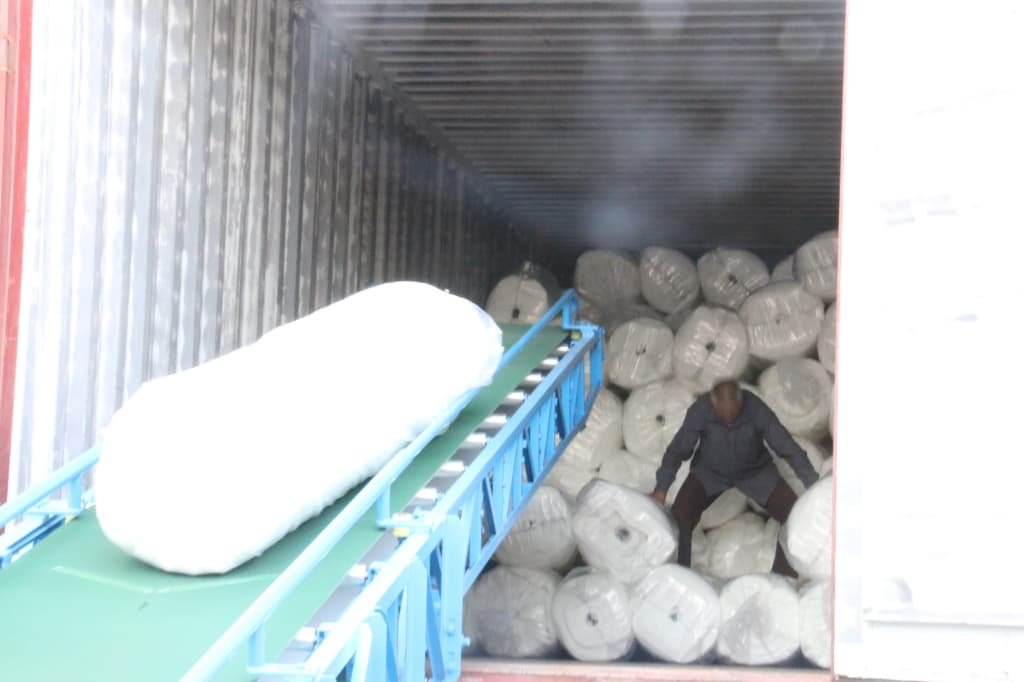
Yes. We can adjust roll length based on customer requirements, fabric thickness, roll weight, container loading, and handling convenience.
For thinner fabrics like Mes-tio Shield™ or B2E-6C, longer rolls may be possible. For thicker fabrics like BD2-6N6 or BD2-7N1, roll length needs to balance handling and shipping space.
Material & Fabric Structure
8 QWhat materials can be used for spacer mesh fabric?
Most spacer mesh fabrics are made from 100% polyester because polyester is stable, durable, cost-effective, and suitable for warp knitting. We can also use nylon, cotton, Tencel™ lyocell, modal, viscose, and spandex blends depending on the application.
For standard polyester options, AC1, BD2D-4B, and BC2-4B4 are practical choices. For skin-friendly materials, BD2T-7F and Mes-tio Shield™ are better options.
What is the difference between FDY and DTY yarn?
FDY yarn is smoother, tighter, and often gives the fabric a cleaner surface. DTY yarn is fluffier and usually gives a softer, more comfortable touch.
For a clean and stable surface, AC1 and BD2-7C1 use FDY yarn. For a softer handfeel, BD2D-11B, BD2D-4B, and AD2D-7F use DTY yarn and are suitable for bedding, baby products, and soft-touch panels.
What is the difference between single bottom and double bottom?
Single bottom is usually lighter and more breathable, but the shrinkage and stretch may be larger. Double bottom is denser, more stable, and often about 10% heavier under similar yarn and pattern conditions.
For lightweight and breathable use, AC1 and AD2-1A are single-bottom options. For better dimensional stability, BD1 wide width, BD2-7C1, BC2-4B2, and BC2-4B4 are double-bottom options.
Does double bottom always mean better fabric?
Not always. Double bottom is better when the customer needs stability, denser structure, or better shape retention. But for products where breathability, softness, and cost are more important, single bottom may be more suitable.
For example, AC1 is a single-bottom fabric with high cost performance for many products. BD1 wide width is a better choice when the customer wants a more stable version of the classic small-hole mesh.
What does the middle yarn do in spacer mesh fabric?
The middle yarn creates the 3D space inside the fabric. It affects thickness, rebound, cushioning, airflow, and support. Thicker or stronger middle yarn usually gives better rebound, but the surface and bottom yarn also need to be matched.
For standard spacer mesh, many fabrics use 30D monofilament. For stronger support, some fabrics use thicker yarn, such as BD2D-7A with 33D middle yarn or BD2-7N1 with 8s middle yarn.
Why do some fabrics use spandex?
Spandex improves stretch and recovery. It is useful when the fabric needs to fit curved surfaces or recover after repeated stretching.
For example, BC2-6B3 contains 8% spandex + 92% polyester. It is suitable for shoes, bags, car seat pads, and wheelchair applications where elasticity and recovery are important.
Why are Tencel™ lyocell and modal used for baby products?
Tencel™ lyocell and modal can provide a smoother, cooler, and more skin-friendly surface. They are suitable for baby bedding, mattress covers, pillows, and other products that contact sensitive skin.
For premium baby products, BD2T-7F uses a Tencel™ lyocell surface. Mes-tio Shield™ uses Lenzing modal, Lenzing lyocell, and EcoCosy viscose, and is designed for skin-friendly breathable applications.
Can plant-based fibers be used in spacer mesh?
Yes, but they are more difficult to knit than polyester because warp knitting requires thousands of yarns to run smoothly at the same time. Plant-based fibers such as cotton, lyocell, bamboo, or viscose may have lower yarn strength or different surface friction, so production efficiency may be lower and defect risk may be higher.
That is why we usually recommend tested structures such as BD2T-7F or Mes-tio Shield™ first, instead of developing a completely new plant-fiber mesh from the beginning.
MOQ & Stock Policy
8 QWhat is your MOQ for stocked fabrics?
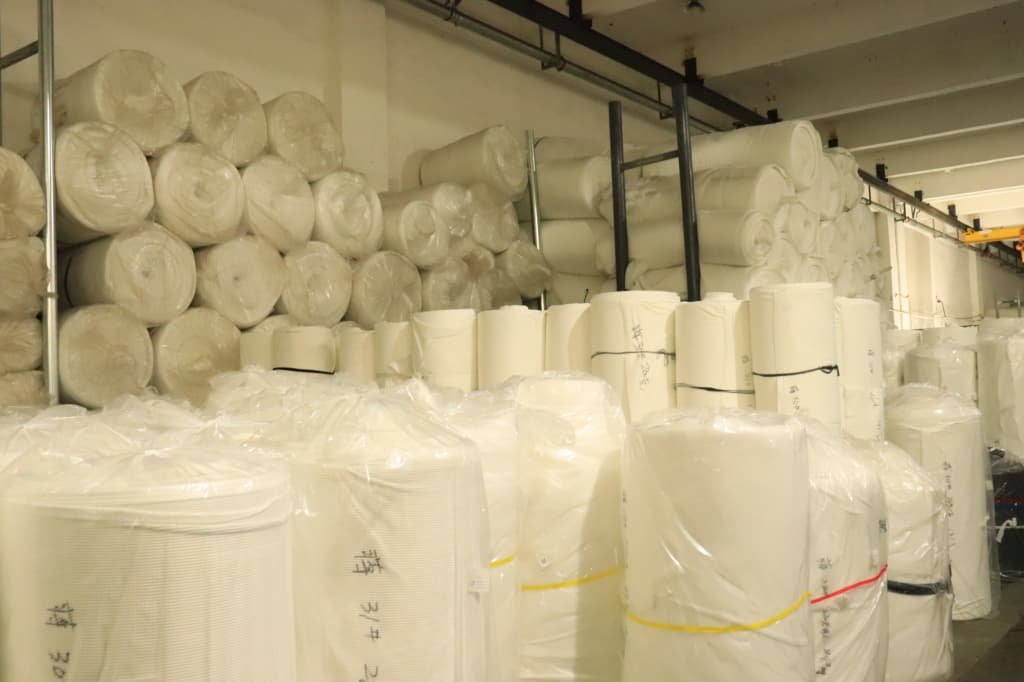
For fabrics with greige stock, the MOQ is usually much lower. A standard dyed color is commonly around 200kg per color, while white or off-white may be available from a smaller quantity depending on stock condition.
Many regular fabrics such as AC1, BD1 wide width, AD1, BD2T-7F, AD2D-7F, and BD2-7C1 are long-term stocked options.
What if my color quantity is less than 200kg?
If the color quantity is lower than the standard dyeing MOQ, we may use a small dyeing vat for 50–80kg. However, small-vat dyeing has lower efficiency and higher cost, so an extra small-vat charge may apply.
For trial orders, we usually recommend choosing from existing greige stock first, such as AC1, BD2D-11B, B2E-6C, or BC2-4B4, depending on application.
Why is MOQ higher for non-stock fabrics?
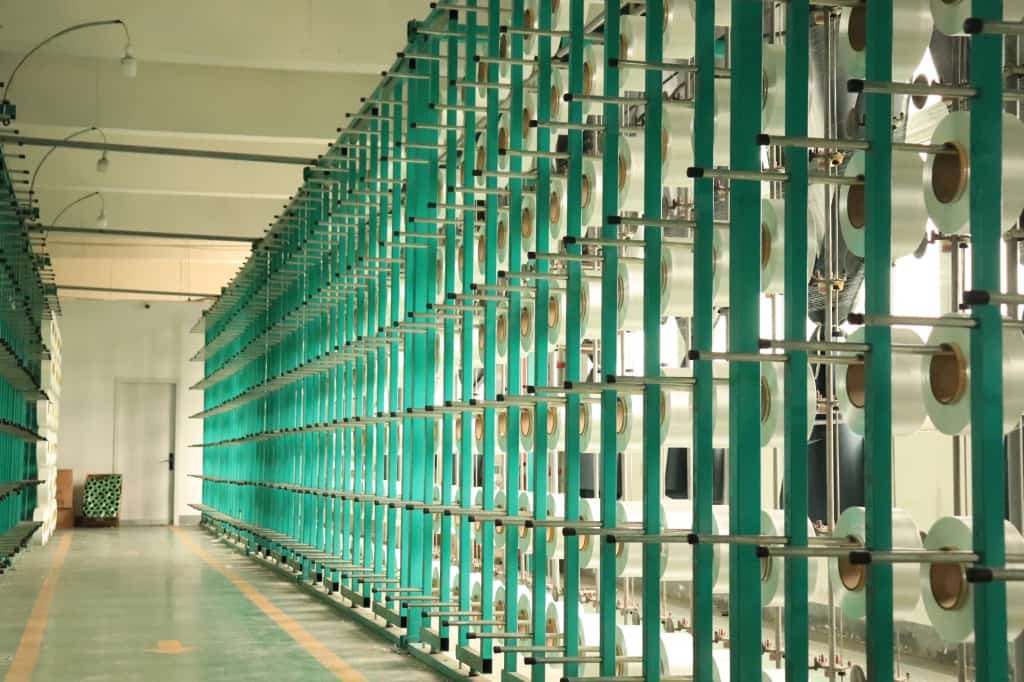
If there is no greige stock, we need to prepare yarn, warp beams, and machine settings. Spacer mesh production requires many yarns running at the same time, so the starting cost is much higher than normal flat fabric.
For new structures, the greige fabric MOQ is usually around 3000kg or more. If this is too high, we will first suggest similar stocked alternatives.
Do you keep every fabric in stock?
No. We keep long-term stock for popular and stable fabrics. For special or niche structures, we may keep only small greige stock or produce them after order confirmation.
For example, AC1, BD1 wide width, BD2T-7F, and Mes-tio Shield™ are long-term stock fabrics. Some special shoe and bag fabrics, such as 2BC2-8A or B2E-4B1, may have only small greige stock.
Why do you keep greige fabric instead of finished colored fabric?
Keeping greige fabric gives customers more color flexibility. Different customers need different colors, color fastness, finishing, and testing requirements. Dyeing after order confirmation helps reduce dead stock and keeps the final color closer to the customer’s requirement.
This is especially useful for fabrics used in mattress covers, baby products, shoes, bags, and seat pads.
Can I order a small quantity for product testing?
Yes. If we have greige stock or finished sample stock, we can support small trial quantities. This is useful before the customer confirms bulk production, product structure, color, or certification requirements.
For quick testing, we usually recommend existing stable fabrics such as AD2D-7F, BD2D-4B, BC2-4B2, B2E-6C, or BD2-6N6.
Can you reserve greige stock for repeat orders?
For regular customers or repeated programs, we can discuss greige stock planning. This helps shorten lead time and reduce supply risk.
For example, if a customer uses BD2T-7F for baby mattress covers or BC2-4B4 for bag panels every season, keeping greige stock can make repeat orders more stable.
How should I choose between stock fabric and custom fabric?
If your product can use an existing stock fabric, this is usually faster, safer, and more cost-effective. Custom fabric is better when you need a special mesh pattern, special material, exact thickness, unique handfeel, or exclusive product positioning.
For most first-time projects, we suggest starting with existing references such as BD2-7C1, AD1, B2E-6C, BC2-6B3, or Mes-tio Shield™, then adjusting after testing.
Performance & Application
8 QWhich spacer mesh fabric is suitable for mattress covers?
For mattress covers, customers usually care about breathability, surface appearance, width, cost, and stable cutting. Wide-width fabrics are preferred because they reduce cutting waste.
For standard mattress covers, AC1 is a cost-effective choice. For a more stable double-bottom structure, BD1 wide width is suitable. For a more premium visual texture, BD2D-4B or BD2-7C1 can be used.
Which fabric is better for baby mattress covers or crib bumpers?
Baby products need soft touch, breathability, safety, and stable thickness. The surface should not feel rough, and the mesh pattern should be gentle for skin contact.
For polyester options, AD2D-7F and BD2-7C1 are suitable because they have refined mesh structures and smooth surfaces. For premium skin-friendly baby products, BD2T-7F and Mes-tio Shield™ are better choices.
Which fabric is suitable for shoes?
Shoe materials need breathability, abrasion resistance, stable structure, and good cutting performance. For shoe uppers or linings, the fabric should not stretch too much or become loose during production.
For general shoe use, BC2-4B4 and BC2-4B2 are good options. For a stronger and more textured shoe fabric, 2BC2-8A can be considered. For firmer slipper use, BD2D-2B3 is designed as a hardened spacer mesh.
Which fabric is suitable for bags and backpack panels?
Bag and backpack materials need support, breathability, abrasion resistance, and a good visual texture. The fabric should also be strong enough for cutting, sewing, and lamination.
For regular bag panels, 2BD2-6B1 offers a black-and-white visual effect. BC2-4B4 has a classic diamond mesh structure. For thicker cushioning and airflow, BD2-6N6, 5.8mm is suitable for backpack shoulder straps or back panels.
Which fabric is better for car seat pads or office chairs?
Seat products need dimensional stability, rebound, abrasion resistance, and comfort. The fabric should not collapse easily after long-term use.
For car seat pads and office chairs, BC2D-2A is a strong option with a thicker and more stable structure. BC2-4B2 is also suitable for seat products. For stronger support and a special stripe structure, BD2-11C can be considered.
Which fabric is suitable for wheelchair or medical cushion use?
Wheelchair and medical cushion applications often need breathability, pressure relief, washability, and stable support. The fabric should reduce heat build-up and recover after compression.
For medium support, AD1 is suitable because it has higher yarn density and better rebound than standard small-hole mesh. For stronger stretch recovery, BC2-6B3 can be used. For thicker breathable cushion structures, BD2-7N1 is a better direction.
Which fabric is suitable for fashion or garment use?
Garment and fashion applications usually need soft touch, drape, light weight, transparency, or special visual texture. The fabric should not feel too stiff unless the design requires structure.
For soft drape, BD2D-11B uses 100% DTY yarn and has through-mesh breathability. For light geometric transparency, B2E-4B2 or B2E-6C can be used. For skin-friendly garment panels, Mes-tio Shield™ is also suitable.
Which fabric is suitable for indoor golf impact screens?
Indoor golf impact screens need a very different structure from normal baby or bedding mesh. The fabric needs enough density, strength, and surface performance for impact and projection.
For this application, BD2D-3A is the matching fabric in our range. It is a 320cm wide, 460GSM, 4mm fabric designed for indoor golf projection screen use.
Production & Quality Control
8 QHow do you control fabric quality before finishing?
After knitting, the greige fabric is inspected before entering heat setting and dyeing. We check defects such as holes, broken yarn, missed stitches, uneven mesh holes, oil stains, and stop marks.
Only qualified greige fabric can enter the next process. This is important because finishing cannot fully fix structural defects from knitting.
How do you control width, GSM, and thickness in bulk production?
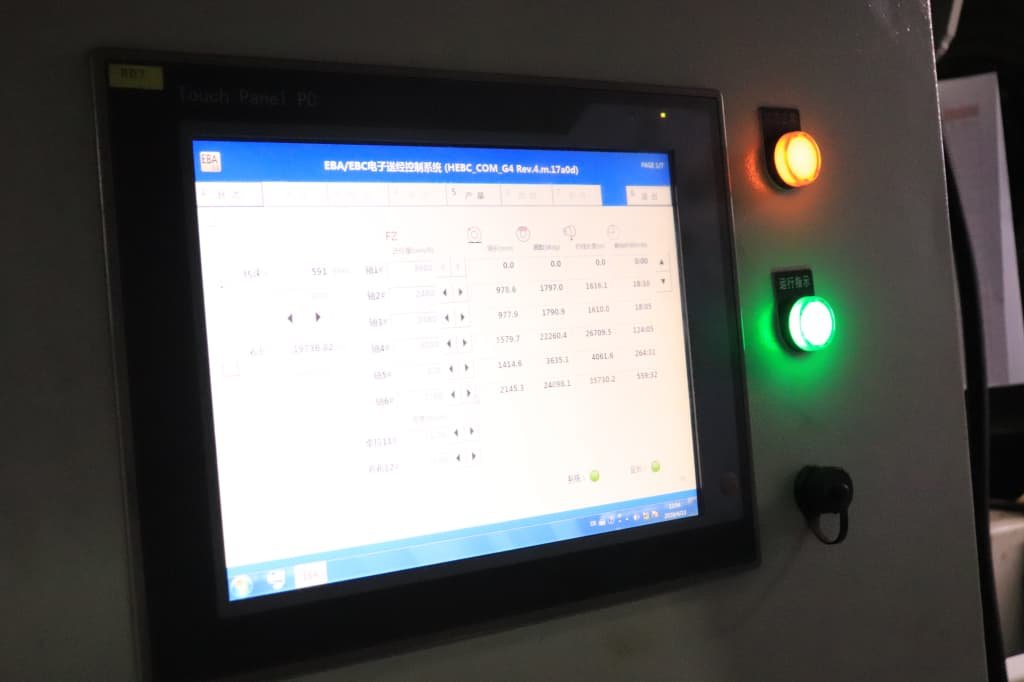
Each fabric has process records, including yarn specification, yarn count, needle arrangement, setting temperature, speed, width, and tension. During finishing, we check actual width, GSM, thickness, mesh shape, handfeel, and elasticity.
For fabrics like BD2D-11B, BD2-6N6, and BC2-6B3, process stability is especially important because handfeel, stretch, and thickness are key performance points.
How do you reduce stop marks and knitting defects?
Stop marks often come from machine stoppage, yarn problems, or unstable machine operation. We keep machines clean, check yarn quality, and use experienced workers to reduce knitting defects.
This is especially important for visible surface fabrics such as 2BD2-6B1, BD2D-4B, BC2-4B4, and B2E-4B2, because surface defects are easier to see.
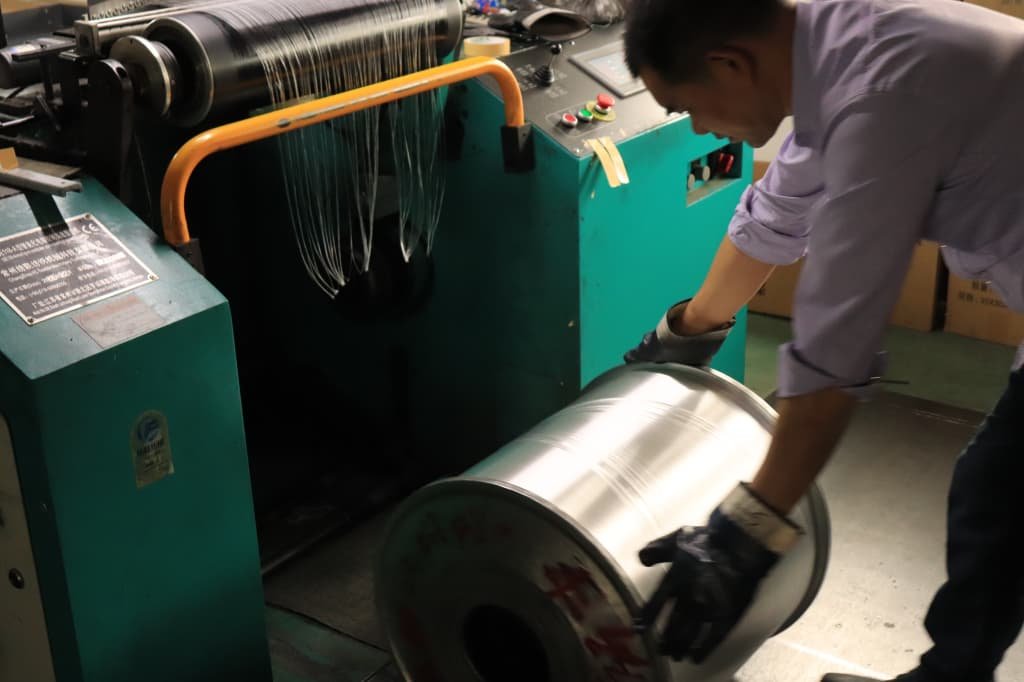
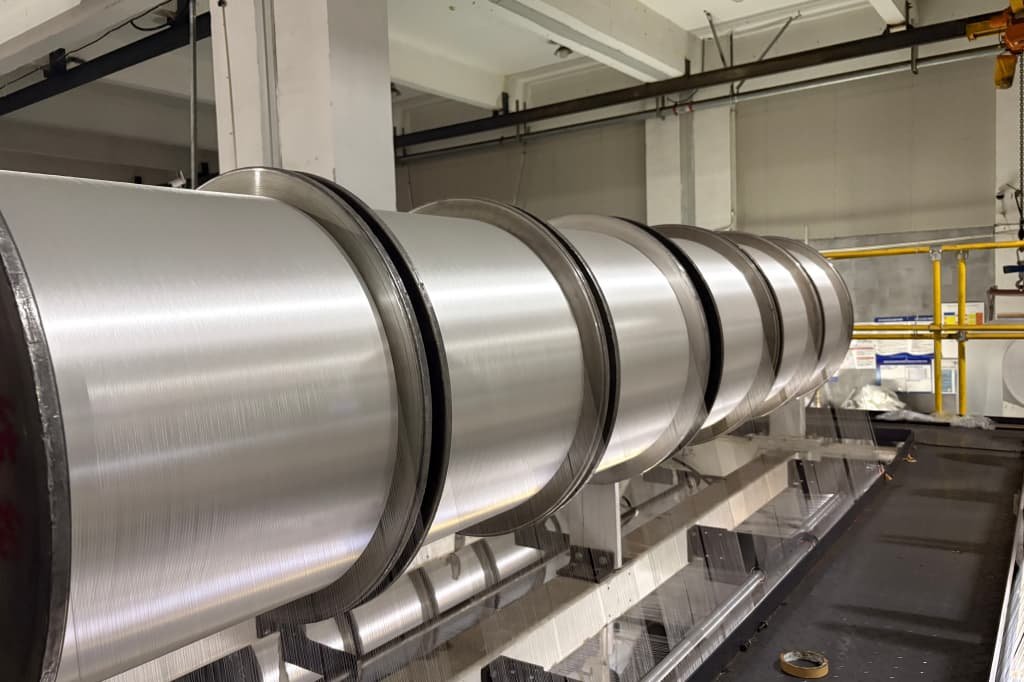
Do you inspect every roll before shipment?
Yes. Finished fabric is inspected before packing. We check color, width, GSM, thickness, mesh appearance, surface defects, handfeel, elasticity, and roll condition.
For B2B customers, this helps reduce cutting loss and production risk after the fabric arrives at their factory.
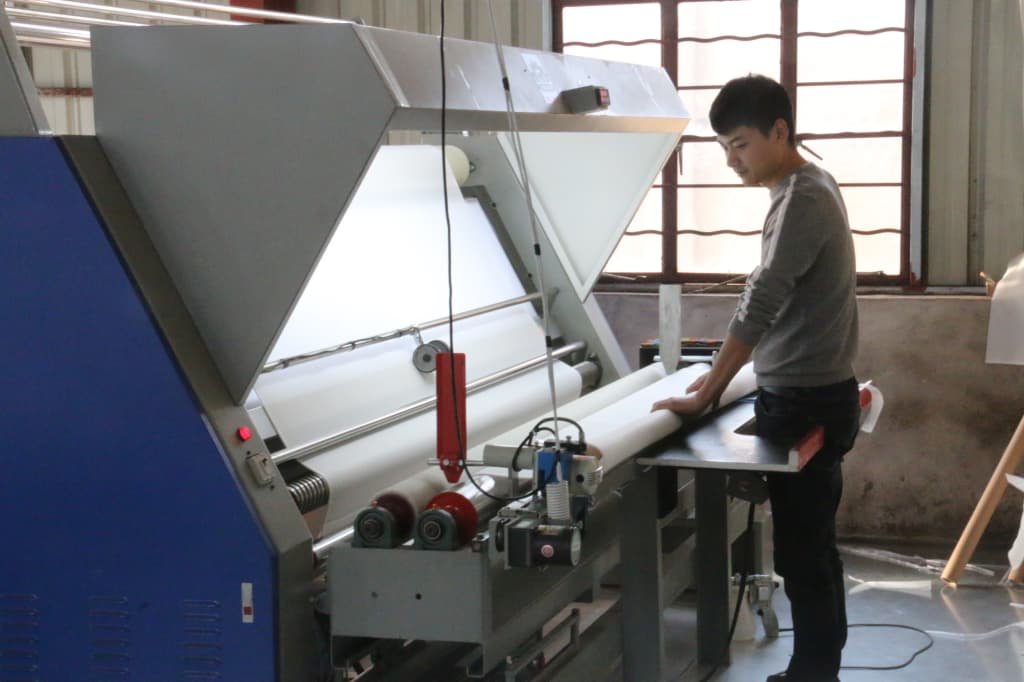
Can you provide inspection reports?
Yes. We can provide fabric inspection reports for bulk orders. If customers need third-party inspection, we can also support inspection before shipment.
This is helpful for mattress factories, baby product factories, footwear brands, bag factories, and distributors who need clear quality records.
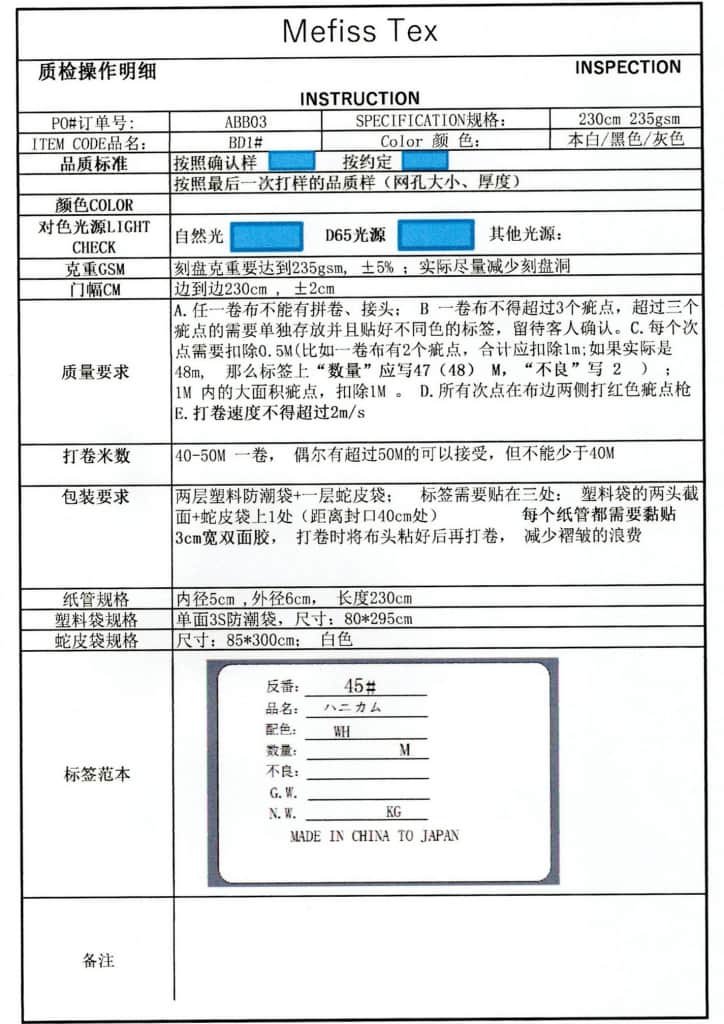
How do you trace quality problems if they happen?
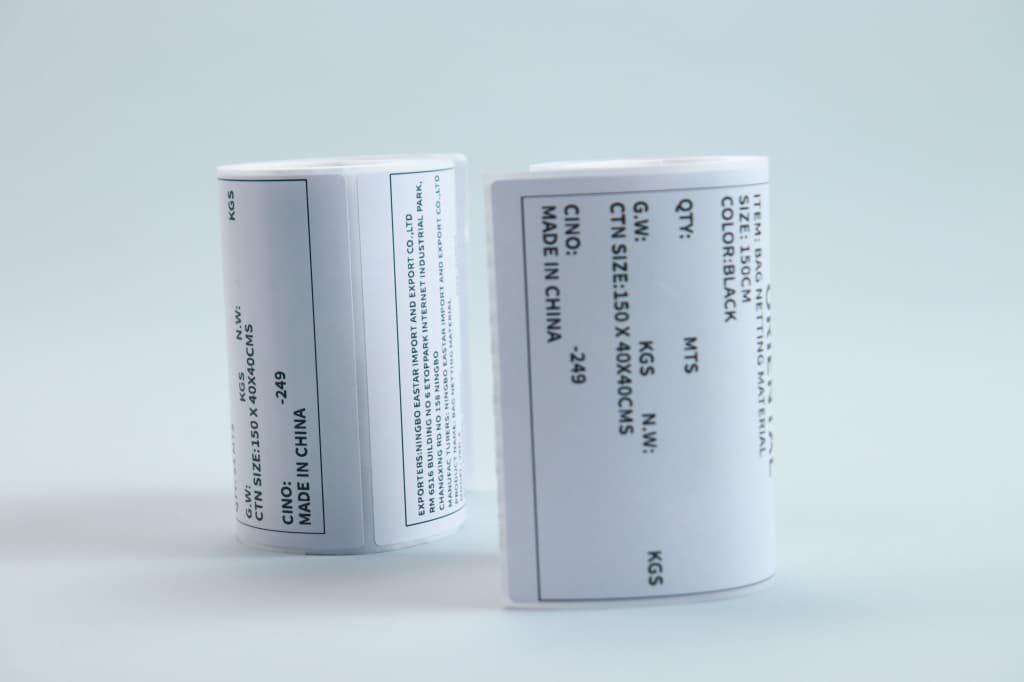
We use batch records and roll labels to trace production information. This can include yarn batch, knitting time, process parameters, inspection results, and related production records.
This helps us identify the cause faster and improve the next production batch.
What tests can be arranged for spacer mesh fabric?
Depending on the application, we can arrange tests for air permeability, abrasion resistance, pilling, color fastness, tensile strength, tear strength, antibacterial performance, flame retardancy, OEKO-TEX, REACH, GRS, and other market requirements.
For baby-related fabrics such as BD2T-7F, AD2D-7F, and Mes-tio Shield™, safety and wash durability tests are often more important. For shoe and bag fabrics such as BC2-4B4 and 2BC2-8A, abrasion and strength tests are more important.
How do you handle quality issues after shipment?
We try to reduce after-sales risk through full inspection before shipment. If a quality issue still happens, we will check photos, videos, roll numbers, defect location, and production records to identify the cause.
If the issue is confirmed to be our responsibility, we will work with the customer to provide a reasonable solution.

Samples & Cooperation
8 QCan you provide free fabric samples?
Yes. For small fabric samples under a reasonable size, we can usually provide them free of charge. Customers normally need to pay the courier cost.
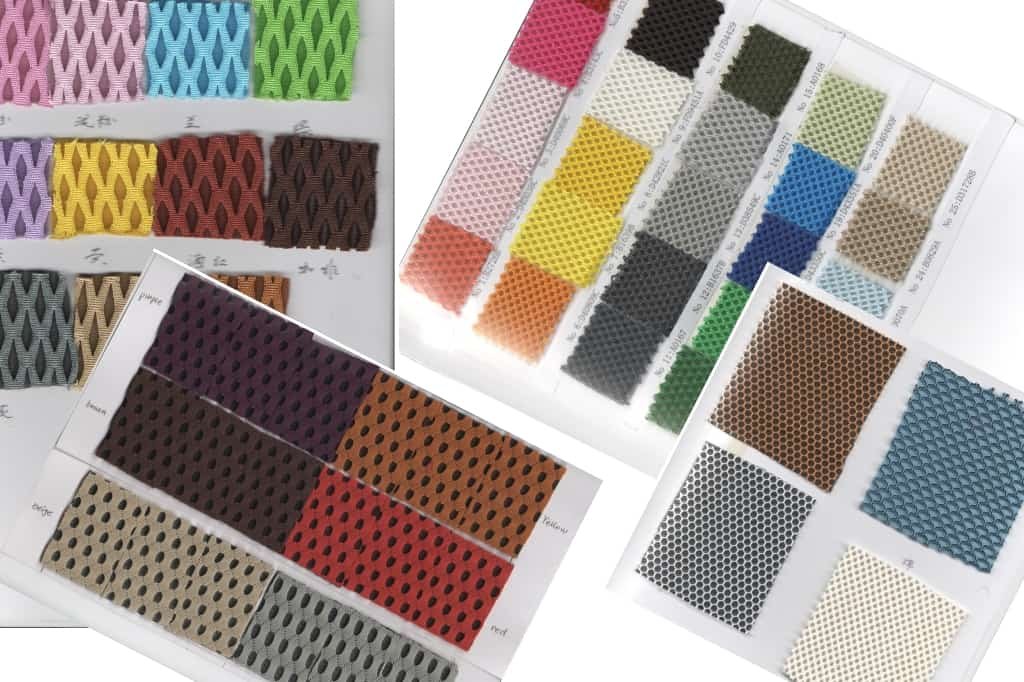
For first evaluation, we can send several options based on your application, such as baby product fabrics, mattress fabrics, shoe fabrics, bag fabrics, or 3D mesh fabrics.
What sample information should I provide?
Please tell us your product type, target thickness, width, GSM, color, softness, support requirement, testing requirement, and estimated bulk quantity. If you have a reference sample or product photo, it will help us recommend faster.
For example, for a baby crib bumper, we may send AD2D-7F, BD2T-7F, and BD2-6N6. For shoe or bag use, we may send BC2-4B4, 2BC2-8A, and BC2-6B3.
Can you send samples in custom colors?
Yes, but custom color samples usually need lab dipping or small dyeing. If the customer only wants to check fabric structure first, we recommend checking available sample colors first.
After the structure is confirmed, we can make lab dips based on Pantone number, color sample, or customer’s original fabric.
Can you help us compare different fabrics before ordering?
Yes. We can compare fabric thickness, GSM, bottom structure, yarn type, softness, rebound, breathability, stretch, and suitable application.
For example, we can compare AC1 vs BD1 wide width for standard small-hole mesh, AD2D-7F vs BD2T-7F for baby products, or BC2-4B4 vs BC2-6B3 for shoes and bags.
Can we visit your factory?
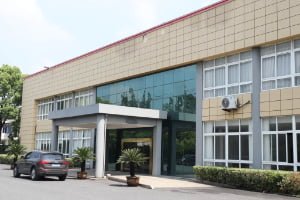
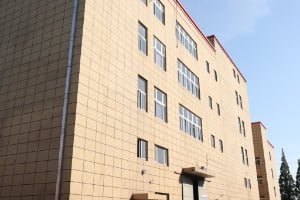
Yes. Warmly welcome! You can visit our factory in Changshu, Jiangsu, China. Our factory is located near Shanghai, Wuxi, Changzhou, and Nantong, with convenient access from Shanghai airports, Wuxi airport, or Changshu railway station.We can pick you up from the station.
A factory visit is helpful for customers who want to check production capacity, quality control, machine types, warehouse, and sample development ability.
Can you support third-party inspection before shipment?
Yes. Customers can arrange third-party inspection before shipment. We can also provide photos, videos, and fabric inspection reports during production and before loading.
This is useful for customers who cannot visit the factory but need confidence before shipment.
How do we start cooperation with Mefiss Textile?
First, send us your fabric requirement and application. Second, our team will recommend suitable fabric options and explain the reason. Third, we arrange samples for testing. Fourth, after quality, price, lead time, and order terms are confirmed, we start bulk production.
This process helps avoid choosing fabric only by price or appearance, and makes sure the material fits your final product.