How to Choose the Right Thickness for Spacer Mesh and 3D Mesh Fabric?
M
Mefiss-Tex
9 min read
A Practical Thickness Guide for Buyers Selecting Spacer Mesh for Different Applications
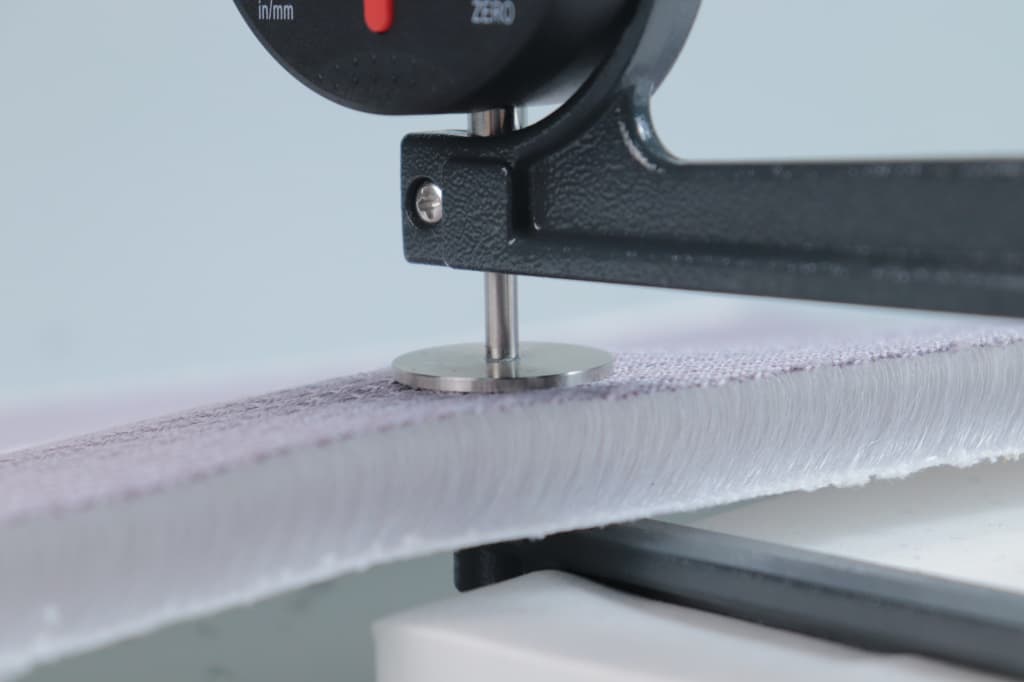
When sourcing spacer mesh or 3D mesh fabric, thickness is often one of the first specifications buyers provide.
A typical inquiry may ask for 2 mm, 3 mm, 5 mm or 10 mm mesh. But thickness alone does not tell you how a fabric will perform.
Two fabrics with the same thickness can have very different GSM, spacer yarns, mesh openings, compression resistance, airflow, stretch and surface feel.
Likewise, a thicker fabric is not automatically more supportive, breathable or durable.
For professional buyers, the better question is:
What thickness and structure will provide the performance required by the finished product?
This guide explains how to choose spacer mesh thickness based on both specifications and application requirements.
What Does Thickness Mean in Spacer Mesh Fabric?
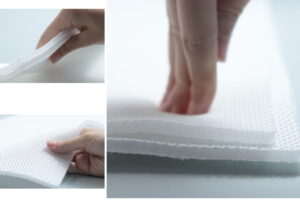
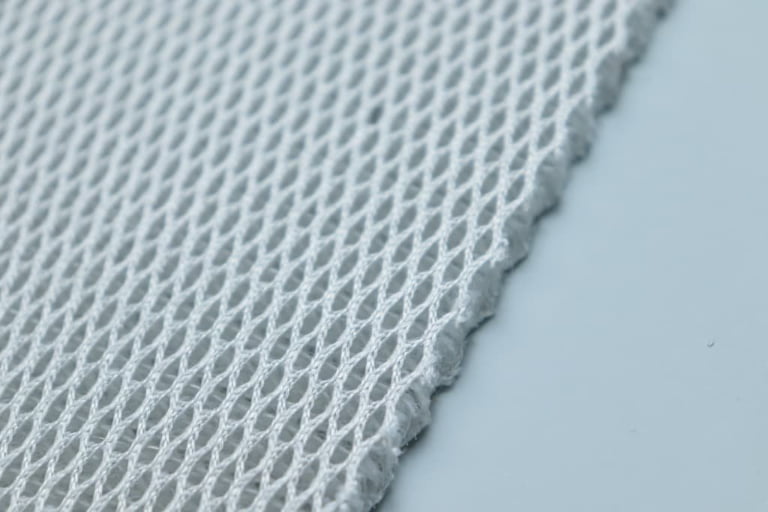
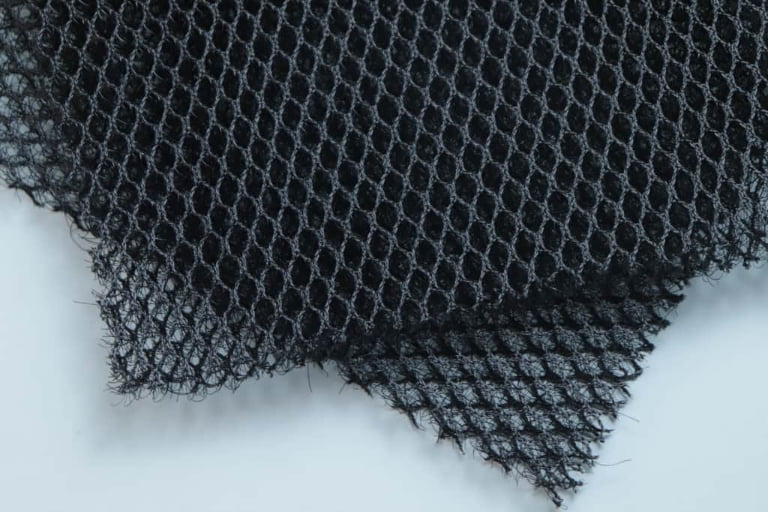
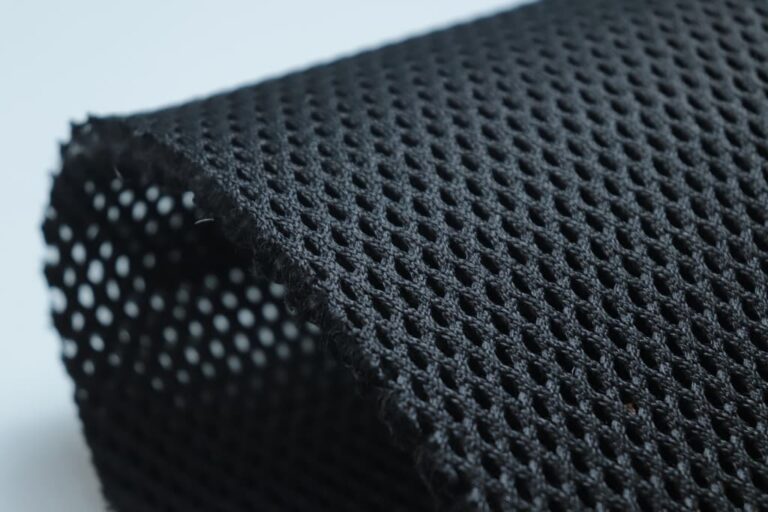
Spacer mesh is a three-dimensional knitted structure consisting broadly of:
Face Layer + Spacer Layer + Bottom Layer
The spacer yarns connect the two outer surfaces and create the three-dimensional space between them.
Therefore, when we describe a spacer mesh as 3 mm, 5 mm or 10 mm, we are referring to the overall thickness of this structure under a specified measurement condition.
Thickness and GSM should not be confused:
-
Thickness describes the depth of the fabric structure.
-
GSM describes the mass of fabric per square meter.
If you are also comparing fabric weight, read our guide to [Spacer Mesh Fabric GSM: Does Higher GSM Mean Better Quality?]
A thicker fabric does not necessarily have a proportionally higher GSM, and a higher-GSM fabric is not necessarily thicker.

What Thicknesses Are Common?
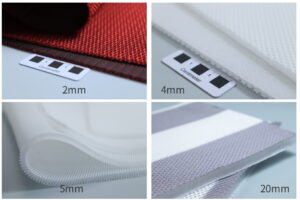
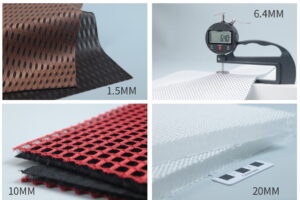
Within the Mefiss product range, conventional spacer mesh fabrics are generally around 1.5–8 mm, while thicker 3D mesh fabrics are generally around 5–20 mm.
The ranges overlap because the distinction between spacer mesh and thick 3D mesh is not determined by thickness alone. Yarn specification, spacer structure, GSM and intended function also matter.
As a practical starting point:
| Thickness | General Selection Direction |
| 1.5–3 mm | Thin, flexible, lower-profile structures |
| 3–5 mm | Versatile spacer mesh for many sewn or padded products |
| 5–8 mm | Greater structural depth, cushioning or support |
| 8–12 mm | Thick 3D mesh for ventilation, cushioning and support |
| 12–20 mm | Deep 3D structures for specialized cushioning or support |
These ranges are selection references, not quality grades.
A 10 mm mesh is not automatically better than a 3 mm mesh. It is designed for a different purpose.
Does Thicker Spacer Mesh Mean Better Support?
Not necessarily.
Thickness describes how tall the structure is. Support describes how the structure behaves when compressed.
Compression behavior also depends on:
-
Spacer yarn diameter
-
Spacer yarn density
-
Spacer yarn angle
-
Knitting structure
-
Fabric thickness
-
Face and backing construction(See our guide to [Single Bottom vs. Double Bottom Spacer Mesh] for a detailed comparison)
This means two fabrics can both be 5 mm thick while behaving very differently under load.
A useful example from the Mefiss range is AD1, a spacer mesh approximately 5.5 mm thick and 340 GSM. Compared with a conventional construction, its spacer yarn density is increased by approximately 30%, creating more body and improved recovery.
The important point is that its performance comes from the combination of thickness and internal structure, rather than 5.5 mm thickness alone.
For applications where support matters, buyers should evaluate compression resistance and recovery together with thickness.
Why Does Spacer Yarn Matter?
The spacer layer is responsible for maintaining the distance between the two outer surfaces.
Within conventional Mefiss spacer mesh constructions, the middle layer commonly uses approximately 30D or 40D monofilament.
Thicker 3D mesh can use much heavier spacer monofilaments such as 8s, 12s, 14s, 16s or 18s, depending on the design. Different spacer-yarn arrangements can also be used to change compression behavior and support.
As the structure becomes thicker, the specification and arrangement of these spacer yarns become increasingly important.
That is why:
“We need 10 mm mesh.”
is useful information, but not enough for accurate material selection.
The supplier also needs to understand what the 10 mm structure is expected to do.
Does Thicker Mesh Mean Better Airflow?
Not automatically.
A thicker spacer structure creates more three-dimensional space, but air still needs an open path through the fabric.
Airflow can also be influenced by:
-
Face mesh openings
-
Backing openness
-
Through-hole alignment
-
Spacer yarn density
-
Overall knitting density
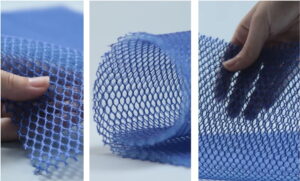
For example, Mefiss T2S-6R is approximately 6.5 mm thick and 360 GSM. It uses large hexagonal openings of approximately 9 × 5 mm on both sides, creating an open three-dimensional structure.
Its ventilation characteristics therefore come from the combination of thickness + mesh openings + internal structure, not thickness alone.
For applications where airflow is critical, such as mattress ventilation, seating or cooling structures, buyers should consider actual air permeability rather than using thickness as a substitute for breathability.
How to Choose Spacer Mesh Thickness by Application
There is no universal rule such as “3 mm is for bags” or “10 mm is for mattresses.”
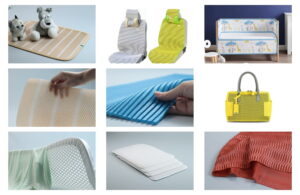
However, thickness ranges can help buyers narrow down the initial selection.
| Approx. Thickness | Possible Application Direction | Main Factors to Check |
| 1.5–3 mm | Bags, footwear, covers, apparel, lightweight padding | Weight, flexibility, stretch, surface |
| 3–5 mm | Mattress panels, seating, backpacks, automotive interiors | Stability, airflow, durability, sewing |
| 5–8 mm | Structured padding, seating, baby products, ventilation layers | Support, recovery, airflow |
| 8–12 mm | Cushion cores, mattress layers, back supports, automotive seating | Compression, recovery, ventilation |
| 12–20 mm | Thick cushions, mattress structures, specialized support layers | Load bearing, recovery, weight, processing |
These are starting points only.
For example, a 5 mm mesh used in a baby product may require a very different surface, support level and structure from a 5 mm mesh used in an automotive component.
Application should therefore come before thickness when selecting the final construction.
Thickness Also Affects Processing
A thicker mesh does not only change product performance. It can also affect manufacturing.
Buyers should consider how the material will be:
-
Cut
-
Sewn
-
Edge-bound
-
Quilted
-
Laminated
-
Folded
-
Rolled and packed
For example, changing from a 3 mm spacer mesh to a 10 mm 3D mesh can significantly affect edge binding, seam construction and roll size.
Therefore, the best material must work not only in the finished product but also in the buyer’s production process.
Can Finishing Affect Spacer Mesh Thickness?
Yes.
After knitting, spacer mesh commonly goes through heat setting to stabilize the structure.
Finished width, tension, overfeed, temperature and machine conditions can influence the final thickness, GSM, mesh shape, hand feel, elasticity and dimensional stability.
For this reason, buyers should evaluate the specifications of the finished fabric, not only the theoretical knitting construction.
When thickness is a critical requirement, the buyer and supplier should also agree on an appropriate measurement method and tolerance.

What Should You Specify Besides Thickness?
An inquiry such as:
“We need 5 mm spacer mesh.”
is a good starting point.
A much more useful specification would be:
Application: Backpack back panel Target Thickness: 4–5 mm Width: 150 cm or wider Surface: Comfortable against clothing Airflow: High Stretch: Low to medium Support: Medium Color: Black Processing: Cutting and sewing
When selecting spacer mesh, consider these parameters together:
| Parameter | What It Tells You |
| Thickness | Structural depth |
| GSM | Mass per square meter |
| Spacer yarn | Support and recovery characteristics |
| Mesh opening | Structural openness |
| Warp/weft stretch | Flexibility and processing behavior |
| Compression resistance | Behavior under load |
| Compression recovery | Ability to return after compression |
| Air permeability | Actual airflow performance |
| Surface yarn | Feel, appearance and durability |
| Width | Cutting and production efficiency |
This gives the supplier enough information to recommend a structure rather than simply searching for a fabric with the requested millimeter value.
Mefiss Insight: Choose Performance First, Then Confirm Thickness
When replacing an existing material, buyers sometimes say:
“Our current fabric is 6 mm, so the replacement must also be 6 mm.”
Sometimes that is necessary.
But it is worth asking what the 6 mm material actually needs to accomplish.
Does it need to:
-
Carry load?
-
Recover after repeated compression?
-
Maximize airflow?
-
Touch the body?
-
Bend or fold?
-
Be sewn or laminated?
-
Remain lightweight?
-
Withstand repeated washing?
If the existing material already has a performance problem, reproducing exactly the same thickness may reproduce the same problem.
A better selection process is:
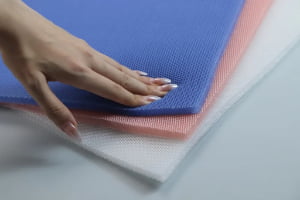
Define the required performance first, then confirm the thickness and structure needed to achieve it.
Frequently Asked Questions
What thickness is spacer mesh fabric?
Within the Mefiss range, conventional spacer mesh is generally around 1.5–8 mm, while thicker 3D mesh constructions are generally around 5–20 mm.
Is thicker spacer mesh more supportive?
Not necessarily. Support also depends on spacer yarn diameter, density, angle, knitting structure and compression behavior. Two fabrics with the same thickness can provide very different support.
Is thicker 3D mesh more breathable?
Not automatically. Thickness creates structural depth, while airflow also depends on mesh openings, backing openness, through-hole alignment and spacer density.
What thickness of spacer mesh should I choose?
Start with the finished application. Consider cushioning, support, airflow, weight, flexibility, surface feel and processing requirements before determining the appropriate thickness range.
Can spacer mesh thickness be customized?
Yes. Thickness can be adjusted during fabric development together with GSM, yarn specification, mesh structure, width and other parameters, subject to the required construction and production feasibility.
Final Takeaway
Thickness is an important spacer mesh specification, but it should never be evaluated alone.
A thicker fabric is not automatically more supportive, more breathable, more durable or higher quality.
For professional material selection, evaluate:
Thickness + GSM + Spacer Yarn + Mesh Structure + Stretch + Compression + Airflow + Application
The goal is not to choose the thickest material available.
The goal is to choose the right thickness and structure for the function your finished product needs to perform.
Need Help Choosing the Right Mesh Thickness?
Send Mefiss your application, target thickness, GSM, required width, airflow, support, stretch, surface feel and processing requirements.
We can compare suitable spacer mesh and 3D mesh constructions and recommend materials for sampling and evaluation.
View Spacer Mesh & 3D Mesh Fabrics → Mesh Gallery
Discuss Your Application → Contact Mefiss
Previous
What Does GSM Mean in Spacer Mesh Fabric, and Does Higher GSM Mean Better Quality?
Next
3D Spacer Mesh vs. Foam: A Manufacturer’s Guide to Cushioning Materials
Leave a Reply